
Uri (우리): Korea's Collective Identity & Shared Responsibility
In Korea, "my wife" is grammatically wrong. The correct phrase is "our wife." That tells you almost everything.
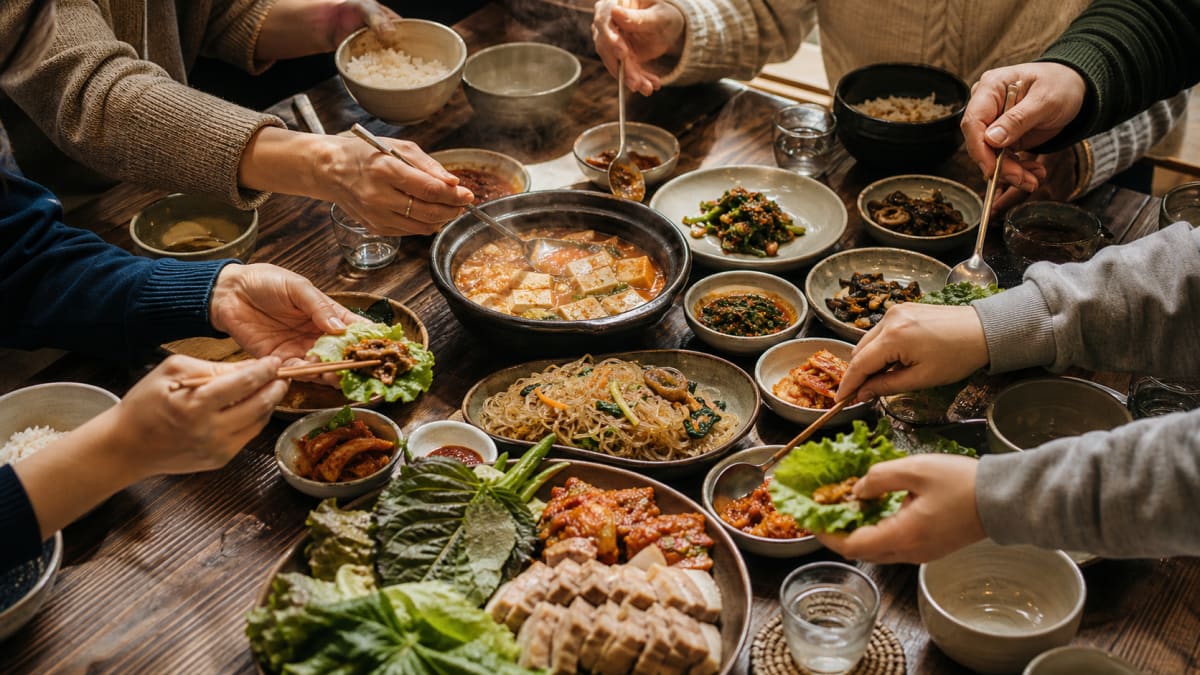
The first Korean word many foreigners learn after 안녕하세요 (annyeonghaseyo) is 우리 (uri) — usually translated as "we" or "our." But 우리 is not just a pronoun. It's a framework for how Koreans understand themselves in relation to the world.
In English, you say "my mother," "my school," "my country." In Korean, those are 우리 어머니, 우리 학교, 우리나라 — our mother, our school, our country. Even when a Korean person is the only one speaking, even when the "we" is clearly just them. This isn't a grammatical accident. It reflects something deeper about how identity works here.
우리의 구조 (The Structure of Uri)
우리 is not a single group. It's a nested system of overlapping circles, each with its own obligations and loyalties.
The innermost circle is 가족 (gajok) — family. Then comes 친구 (chingu) — close friends, often formed in school and kept for life. Then 직장 (jikjang) — the workplace. Then broader communities: alumni networks, regional ties, shared military service. Koreans navigate all of these simultaneously, and the rules shift depending on which circle is active.
What makes this different from Western concepts of community is the weight of mutual obligation. Belonging to a 우리 is not just an identity — it comes with responsibilities. You look after people in your circle. You show up. You contribute. And you expect the same in return.
Tip — 우리나라 (Our Country): Koreans refer to Korea as 우리나라 even when speaking to foreigners — literally "our country," not "my country." It's not exclusionary. It reflects that national identity is felt collectively, not individually. When a Korean athlete wins a gold medal, the news headline reads "우리가 이겼다" — we won.
내부인과 외부인 (Insider and Outsider)
The 우리 system creates a sharp distinction between 내 사람 (nae saram) — my people, those inside your circle — and outsiders. This is one of the most disorienting things foreigners experience in Korea.
Strangers on the subway may seem indifferent to the point of rudeness — no eye contact, no apology if they bump you, no reaction if you drop something. The same person, if you are introduced through a mutual connection, suddenly transforms. They will go out of their way to help you. They'll recommend restaurants, make phone calls on your behalf, insist on paying.
The difference isn't hypocrisy. It's that you've moved from outside to inside their circle. Koreans don't extend the same warmth universally — they extend it deeply, to those who belong.
For foreigners, getting in is the challenge. The most common route: being introduced by someone already inside, shared experience (a class, a workplace, military service), or time — simply being present long enough to stop being a stranger.
집단 책임 (Collective Responsibility)
Uri produces something that confuses many foreigners: shared accountability.
When one team member misses a deadline, the whole team may stay late. When one department makes an error, the entire division may face consequences. When a K-Pop idol is caught in a scandal, group activities are suspended — sometimes indefinitely. This is not punishment as Westerners understand it. It is the logical extension of shared identity: if we succeed together, we bear failure together.
But the same system produces extraordinary solidarity in crisis — twice in recent Korean history with a clarity that stunned the world.
In December 2007, a tanker collision off the coast of 태안 (Taean) spilled approximately 10,900 tonnes of crude oil into the Yellow Sea — the worst oil spill in Korean history. Within weeks, more than 1.2 million volunteers descended on the coastline. They came from every province: students, office workers, farmers, elderly couples. They scraped oil from rocks by hand, often working in freezing temperatures with makeshift tools. The cleanup that experts estimated would take decades was largely complete within a few years. No government mandate brought them. 우리 바다 — our sea — was in danger.
A decade earlier, when Korea faced the 1997 IMF financial crisis (외환위기), ordinary citizens had lined up to donate their gold jewelry — wedding rings, baby bracelets, family heirlooms — to help stabilize the national debt. Voluntarily, en masse. 우리나라 was in trouble, and 우리 responded.
Tip — 우리 at Work (직장에서의 우리): If a Korean colleague says "우리 팀이 결정했어요" (our team decided), this often means the decision was made collectively — or at least that's how it will be presented. Asking "but what do you think?" can put them in an uncomfortable position. The team speaks with one voice.
우리가 만드는 것 (What Uri Creates)
The 우리 system is not without cost — the pressure to conform, the difficulty of dissent, the exhaustion of constant obligation. But it also produces things that foreigners frequently cite as Korea's most remarkable qualities.
The speed of national mobilization. The density of social trust — you can leave your laptop at a café table and it will be there when you return. The intensity of fan communities, where supporters feel genuine co-ownership of an artist's success. The way a neighborhood convenience store owner knows your usual order after three visits.
우리 also explains something about how Koreans receive criticism from outside. Criticism of Korea — its food, its culture, its history — can feel to Koreans like criticism of themselves, not just of an abstract place. Because in a 우리 framework, the country is not separate from the person. It's an extension of who they are.
Understanding 우리 doesn't mean agreeing with every expression of it. But it reframes most of what foreigners find confusing about Korea: the clannishness, the solidarity, the simultaneous warmth and coldness, the extraordinary collective achievement. It all comes from the same place.
Key Facts
우리 (Uri) | Pronoun meaning "we / our" — used in Korean where English uses "my," even for personal relationships and possessions |
기본 단위 (Basic Unit) | 가족 (family) → 친구 (close friends) → 직장 (workplace) → 동문·지역 (alumni / regional ties) — nested circles of mutual obligation |
우리나라 (Our Country) | Literally "our country" — how Koreans refer to Korea regardless of context; reflects collective national identity |
내 사람 (My People) | Those inside your circle; the distinction between insider and outsider determines the depth of social engagement |
집단 책임 (Collective Responsibility) | Shared accountability for group outcomes — the 2007 Taean oil spill (1.2 million volunteers) and the 1997 gold-donation campaign are defining examples |
내부인 진입 (Entering the Circle) | Introduction by a mutual contact, shared experience, or sustained presence — once inside, warmth is deep and lasting |
비즈니스 함의 (Business Implication) | Team decisions are presented collectively; individual dissent is uncomfortable; leaving before seniors can signal group abandonment |
Comments
Inappropriate comments may be deleted.
Log in to leave a comment.
No comments yet. Be the first!