
Korea in the World
Korea's global role, diplomacy, and international influence.
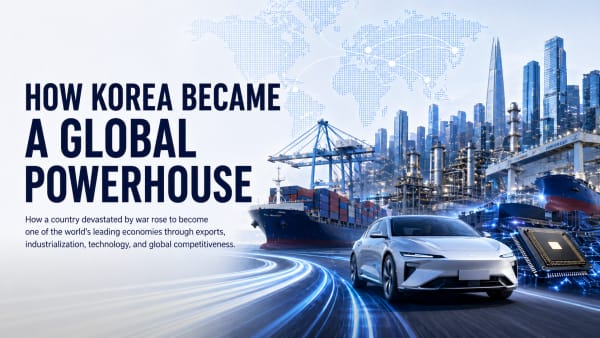
How Korea Became a Global Powerhouse (글로벌 강국)
A country that had nothing in 1953 is now the world's 13th largest economy. This is how.
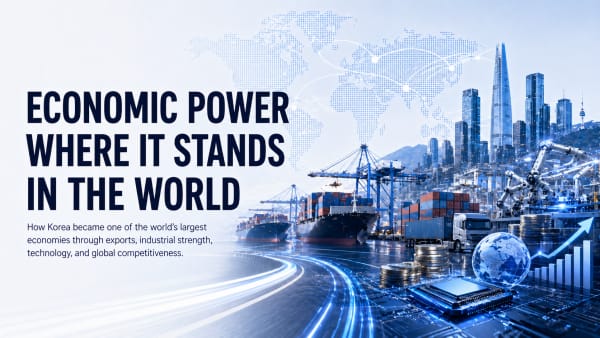
Economic Power (경제 규모): Where It Stands in the World
The numbers behind the miracle — and what they actually mean.

Semiconductors (반도체): The World's Memory Capital
Two Korean companies control nearly three-quarters of the world's memory chip supply. Here's how that happened — and why it matters.
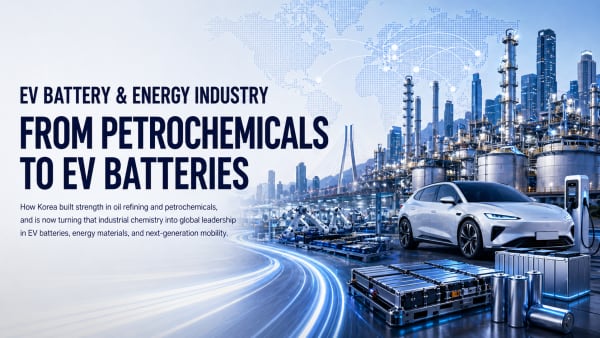
EV Battery & Energy Industry (배터리·에너지): From Petrochemicals to EV Batteries
Korea built its industrial base on oil refining. Now it's building the batteries that will replace the internal combustion engine. Both are happening simultaneously.
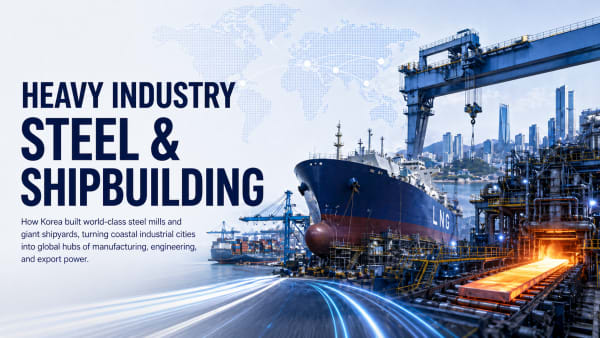
Heavy Industry (중공업): Steel & Shipbuilding
Korea built the world's most efficient steel mills and the world's largest shipyards — often in the same coastal cities, within the same decades.
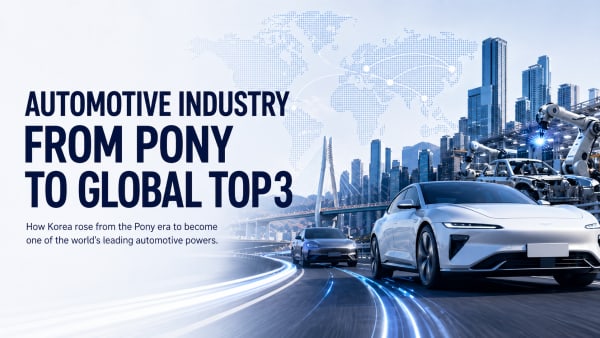
Automotive Industry (자동차): From Pony to Global Top 3
In 1975, Korea exported its first car. By 2023, Hyundai-Kia was selling 730 million vehicles a year and winning Car of the Year awards on three continents.

Defense Industry (방산): From Aid Recipient to Arms Exporter
Korea spent decades depending on American weapons. Now it's one of the world's fastest-growing arms exporters — and its customers include NATO members.

Nuclear Energy Exports (원전): From UAE to the World
Korea built its first nuclear reactor with American help in 1978. By 2009, it was winning contracts to build reactors in the Middle East. Now it's one of only a handful of countries capable of exporting complete nuclear power plant systems.

Bio & Healthcare Industry (바이오·헬스케어): The Next Export Powerhouse
Korea dominates memory chips and ships. Its next target is biologics — and it's already the world's largest contract manufacturer of biopharmaceuticals.
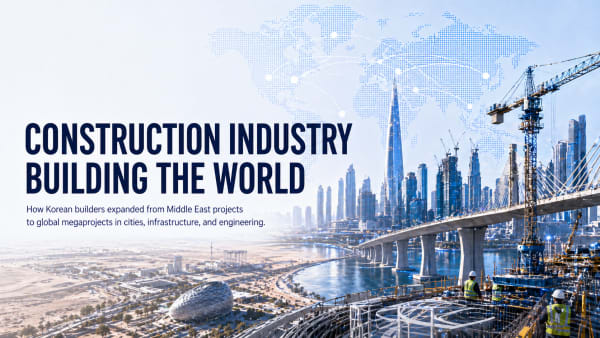
Builds the World (해외건설): From Middle East to Megaprojects
Korean construction companies built the highways of Saudi Arabia, the towers of Dubai, the nuclear plants of the UAE, and the subway systems of Southeast Asia. The story of Korean overseas construction is the story of how an aid recipient became a global builder.
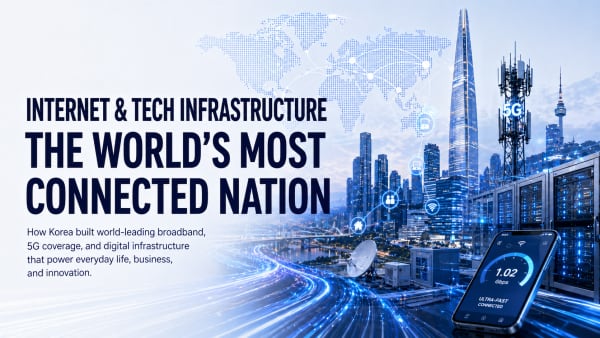
Internet & Tech Infrastructure (IT 인프라): The World's Most Connected Nation
Korea has the fastest internet, the highest smartphone penetration, and a digital infrastructure that the rest of the world spent two decades trying to replicate. Here's how it got built — and what it enables.

Press Freedom & Media in Korea (언론·미디어): An Honest Assessment
Korea has a free press. It also has a history of government pressure on broadcasters, concentration in a handful of major outlets, and a media landscape that reflects its political polarization sharply. Both things are true simultaneously.
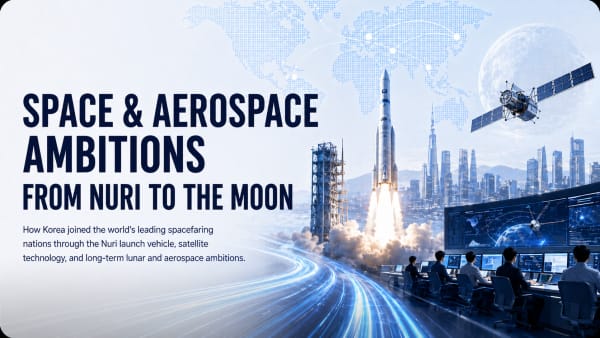
Space & Aerospace Ambitions (우주·항공): From Nuri to the Moon
On June 21, 2022, a rocket built entirely with Korean technology lifted off from Korean soil and reached orbit. It took 30 years to get there — and it was just the beginning.
K-Pop (케이팝) leading K-Culture: A Cultural & Economic Analysis
K-Pop is not just music. It is a system — of talent development, marketing, fandom management, and global distribution — that has produced the most successful cultural export operation in Korean history.
Business of Korean Content (콘텐츠 산업): Hallyu by the Numbers
K-Pop gets the headlines. But Korean content is a $15 billion export industry that spans film, drama, webtoon, game, and beauty — and it's been growing for 25 years.
From Aid Recipient to Global Donor (ODA): A Unique Development Story
Korea received foreign aid to survive. Then it repaid it. Then it became a donor itself. No other country has made this transition in the modern era.