
Cost of Living (생활비): What Foreigners Actually Spend
Seoul is expensive by Asian standards but cheaper than London, Sydney, or New York. What you actually spend depends enormously on the choices you make — and which ones Korea makes for you.
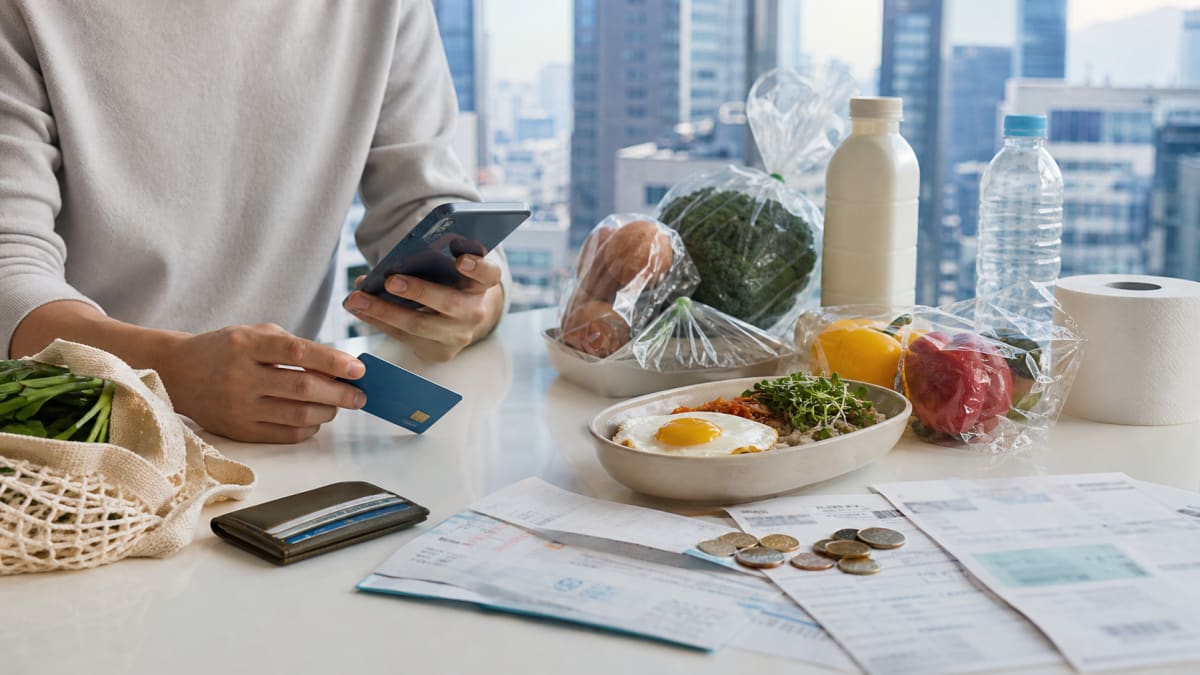
There is a wide gap between what cost-of-living indices say about Seoul and what foreigners actually spend living there. The indices are averages; life in Korea is specific. A foreign teacher in 노원구 (Nowon-gu) with employer-provided housing and a school cafeteria lunch spends radically less than a finance professional renting in 강남구 and eating out daily. This article gives you real numbers for real choices — not averages of averages.
주거비 (Housing)
Housing is the single largest variable in Korean living costs — and the one most dependent on visa situation, employer, and neighborhood choice.
주거 유형 (Housing type) | 월 비용 (Monthly cost) | 비고 (Notes) |
|---|---|---|
고시원 (Gosiwon) | ₩30만–₩60만 | Shared facilities; furnished; month-to-month |
오피스텔 외곽 (Outer Seoul officetel) | ₩60만–₩100만 + 보증금 ₩1,000만 | Furnished; utilities separate |
오피스텔 강남 (Gangnam officetel) | ₩120만–₩180만 + 보증금 ₩3,000만–₩5,000만 | Furnished; premium location |
아파트 서울 외곽 (Outer Seoul apartment) | ₩70만–₩120만 + 보증금 ₩2,000만–₩5,000만 | |
고용주 제공 숙소 (Employer-provided) | ₩0 (포함) | EPIK, 일부 학원 포함 |
핵심: If your employer provides housing — as EPIK and many 학원 do — your total cost of living drops dramatically. This is the single most significant variable separating low-cost and high-cost foreigner experiences in Korea.
식비 (Food)
Korea offers one of the best value propositions in the world for eating well at low cost — particularly for Korean food.
식당 밥 (Restaurant meals):
식사 유형 (Meal type) | 비용 (Cost) |
|---|---|
분식집 김밥·라면 (Kimbap/ramen at 분식집) | ₩3,000–₩6,000 |
한식 백반 (Korean set meal) | ₩7,000–₩10,000 |
편의점 도시락 (Convenience store meal) | ₩3,500–₩6,000 |
배달 치킨 (Delivery fried chicken) | ₩18,000–₩25,000 |
삼겹살 1인분 (Pork belly per person) | ₩15,000–₩25,000 |
스타벅스 아메리카노 (Starbucks Americano) | ₩4,500–₩5,500 |
편의점 커피 (Convenience store coffee) | ₩1,000–₩1,500 |
서양식 레스토랑 (Western restaurant) | ₩20,000–₩50,000+ |
현실적 월 식비 (Realistic monthly food costs):
저예산 (Low budget — mostly Korean food, some cooking): ₩30만–₩50만
중예산 (Mid budget — mix of Korean and international): ₩50만–₩90만
고예산 (High budget — frequent Western dining, imported groceries): ₩100만–₩200만+
교통비 (Transportation)
Korea's public transit is excellent and cheap — particularly compared to European or Australian equivalents.
항목 (Item) | 비용 (Cost) |
|---|---|
서울 지하철 기본요금 (Seoul subway base fare) | ₩1,400 |
월 교통비 — 대중교통 위주 (Monthly transit — public transport) | ₩60,000–₩120,000 |
택시 기본요금 (Taxi base fare) | ₩4,800 |
카카오T 단거리 (Short Kakao T ride) | ₩6,000–₩15,000 |
자동차 유지비 (Car ownership — fuel, insurance, parking) | ₩300,000–₩600,000 |
외국인을 위한 참고: Public transit is excellent enough that most foreigners in Seoul do not need a car. A car significantly raises total living costs and provides limited benefit in a city with this transit density.
통신비 (Telecommunications)
항목 (Item) | 비용 (Cost) |
|---|---|
알뜰폰 무제한 요금제 (MVNO unlimited plan) | ₩3만5천–₩4만5천/월 |
3대 통신사 무제한 (Major carrier unlimited) | ₩6만9천–₩8만9천/월 |
인터넷 — 아파트 (Home internet — apartment) | ₩2만5천–₩3만5천/월 |
의료비 (Healthcare)
With 건강보험 (National Health Insurance) enrollment — mandatory for most foreign residents — routine healthcare is remarkably affordable.
항목 (Item) | 비용 (Cost) |
|---|---|
내과 진료 (Clinic visit) | ₩3,000–₩8,000 (본인부담) |
처방약 7일치 (7-day prescription) | ₩3,000–₩15,000 |
치과 스케일링 연 1회 (Annual dental scaling — insured) | ₩15,000 |
건강보험료 직장가입자 (Health insurance — employed) | 급여의 약 3.545% |
월별 총 생활비 시나리오 (Monthly Total Cost Scenarios)
시나리오 A: 저예산 (Low budget — EPIK teacher, housing provided)
항목 | 월 비용 |
|---|---|
주거 (Housing — employer provided) | ₩0 |
식비 (Food — mostly Korean) | ₩40만 |
교통 (Transportation) | ₩8만 |
통신 (Phone — MVNO) | ₩4만 |
의료보험 (Health insurance) | ₩6만 |
여가·소비 (Entertainment/personal) | ₩30만 |
합계 (Total) | 약 ₩88만 |
시나리오 B: 중예산 (Mid budget — professional, own housing in outer Seoul)
항목 | 월 비용 |
|---|---|
주거 (Housing — outer Seoul officetel) | ₩90만 |
식비 (Food — mixed) | ₩70만 |
교통 (Transportation — transit) | ₩10만 |
통신 (Phone + internet) | ₩8만 |
의료보험 (Health insurance) | ₩10만 |
여가·소비 (Entertainment/personal) | ₩50만 |
합계 (Total) | 약 ₩238만 |
시나리오 C: 고예산 (High budget — finance professional, Gangnam)
항목 | 월 비용 |
|---|---|
주거 (Housing — Gangnam officetel) | ₩180만 |
식비 (Food — frequent dining out) | ₩150만 |
교통 (Transportation — mix of transit/taxi) | ₩20만 |
통신 (Phone + internet) | ₩10만 |
의료보험 (Health insurance) | ₩15만 |
여가·소비 (Entertainment/personal) | ₩100만 |
합계 (Total) | 약 ₩475만 |
Tip — 서울 vs. 지방 (Seoul vs. regional cities): Living costs in 부산, 대구, 대전, and 광주 are approximately 20–35% lower than Seoul across most categories. Housing costs are the most significant difference — a comparable apartment in 부산 costs roughly half what the same size costs in Seoul. For foreigners whose job doesn't require a Seoul location, regional cities offer meaningfully lower cost of living with most of the same lifestyle quality.
Key Facts
최대 비용 변수 (Largest cost variable) | Housing — ranges from ₩0 (employer-provided) to ₩180만+/month (Gangnam) |
저예산 월 생활비 (Low budget monthly) | Approximately ₩88만 — housing provided scenario |
중예산 월 생활비 (Mid budget monthly) | Approximately ₩238만 — own housing in outer Seoul |
고예산 월 생활비 (High budget monthly) | Approximately ₩475만 — Gangnam with frequent dining |
지하철 월 교통비 (Monthly transit cost) | ₩6만–₩12만 — public transit only |
한식 점심 비용 (Korean lunch cost) | ₩7,000–₩10,000 — excellent value |
서울 vs. 지방 비용 차이 (Seoul vs. regional cost difference) | Regional cities approximately 20–35% cheaper than Seoul |
의료비 — 보험 적용 후 (Medical cost after insurance) | ₩3,000–₩8,000 for a clinic visit — among OECD's most affordable |
Comments
Inappropriate comments may be deleted.
Log in to leave a comment.
No comments yet. Be the first!