
Goblin (도깨비): The Drama That Defined Korean Fantasy
An immortal being, a grim reaper, a mortal girl, and the specific sadness of loving someone you can't keep.
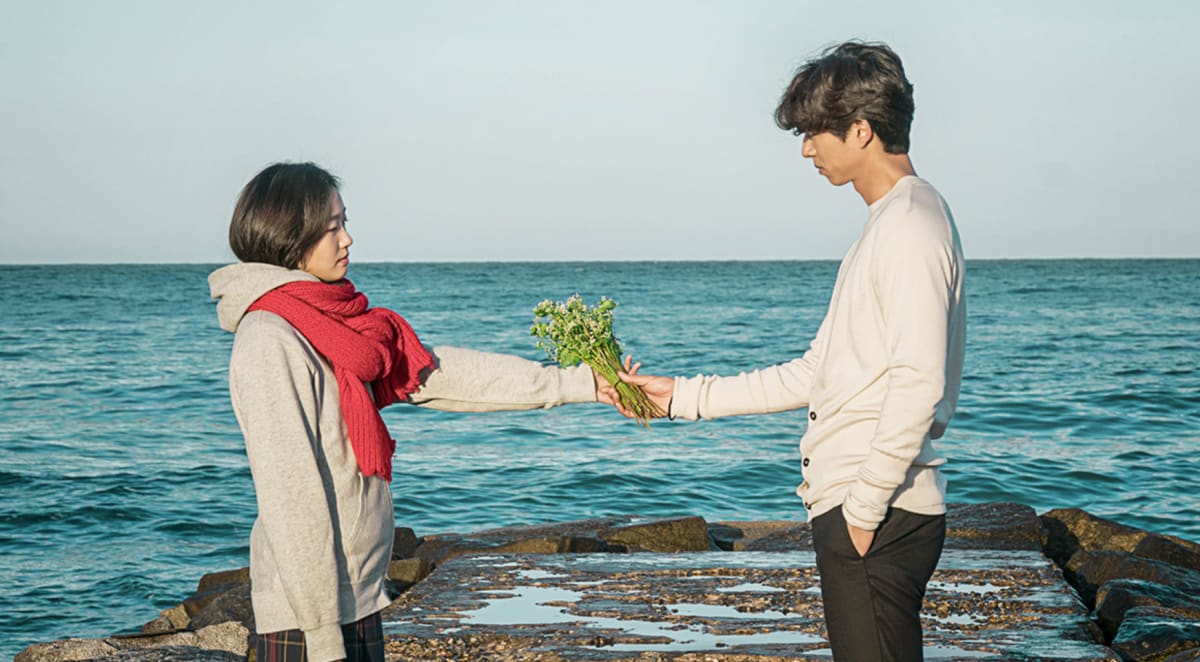
Goblin didn't invent Korean fantasy romance. It perfected it — and in doing so established the visual language, emotional register, and narrative template that every Korean fantasy drama since has worked in relation to. The production design became a reference. The original soundtrack became a genre unto itself. The central relationship between an immortal man and a mortal woman became the defining expression of Korean drama's most characteristic preoccupation: what happens to love when one party will outlast the other.
The Story
Kim Shin (Gong Yoo) was a general in the Goryeo period — decorated, beloved, betrayed. He was killed by the king he served, and as punishment for the lives he took in war, he was made immortal with a sword through his chest. The sword can only be removed by his "bride" — a person whose identity is encoded in a prophecy. When it's removed, he will finally die.
Nine hundred years later, Ji Eun-tak (Kim Go-eun) is a nineteen-year-old girl living in the present. She can see ghosts. She accidentally summons the goblin. She may be his bride. She doesn't fully understand what that means.
Living with them — in a house that exists outside normal space — is Reaper (Lee Dong-wook): a grim reaper without memory of who he was in life, assigned to collect the dead, who falls into an impossible situation when he falls for a woman from the goblin's world.
The Cast
Actor | Character | Note |
|---|---|---|
Gong Yoo | Kim Shin / The Goblin | Career-defining performance; Gong Yoo at the peak of his screen presence |
Lee Dong-wook | Wang Yeo / The Reaper | Equally praised; the dynamic between goblin and reaper is the drama's emotional spine |
Kim Go-eun | Ji Eun-tak | Carries the comedy of the first half and the grief of the second |
Yoo In-na | Sunny | A chicken restaurant owner with a connection to the reaper's forgotten past |
The dynamic between Gong Yoo and Lee Dong-wook — two immortal beings who have a history neither fully understands, forced to coexist, gradually becoming something like brothers — is widely considered one of K-Drama's finest male relationships. Their scenes function as a counterpoint to the central romance: where the romance is about one kind of love, the goblin-reaper relationship is about another.
The Production
Writer: Kim Eun-sook — whose signature (elaborate supernatural premise, emotional extremity, sacrifice over resolution) is all over Goblin.
Director: Lee Eung-bok — whose cinematography for Goblin established what the modern Korean fantasy drama looks like. The Canada sequences (Quebec City standing in for a fairy-tale elsewhere), the autumn sequences in Korea, the specific golden light that seems to follow the goblin — all are his.
Budget: One of the highest-budget Korean dramas of its era. The production design — costumes, locations, visual effects — was unprecedented for Korean television at the time and influenced the industry's investment in production values across the following years.
OST: Goblin's original soundtrack is one of the most commercially successful in Korean drama history. HEIZE's "你曾是少年", Crush's "Beautiful," and EXO's Baekhyun's "Stay With Me" (with Chanyeol) became streaming phenomena that outlasted the drama itself. The OST is genuinely good as music, not just as ambient accompaniment.
Why It Works
The premise carries emotional weight. The goblin's sword is not an action device — it's the central metaphor. The only person who can end his suffering is the person he will love. To choose happiness is to choose death. To be loved fully is to ask the beloved to end you. This is Korean romance's emotional extreme taken to its logical conclusion.
The Reaper's arc is the drama's most surprising achievement. The reaper begins as comedy — deadpan, petty, perpetually annoyed by the goblin — and gradually becomes the drama's most emotionally devastating story. His love for Sunny, the discoveries about his past, and the specific cost of his situation arrive with a force that the central romance — carefully built as it is — doesn't always match.
The comedy earns the grief. Goblin is funnier than its reputation suggests. The first half is genuinely playful: the goblin's bewildered response to the modern world, his bickering with the reaper, Eun-tak's cheerful pragmatism about her bizarre situation. This comedy is not incidental — it accumulates goodwill that the drama deploys in its second half when the emotional weight increases dramatically.
Tip — Canada: A significant portion of Goblin was filmed on location in Quebec City, which was unfamiliar to most Korean viewers and felt explicitly like "another world." If you watch and feel the locations are unusually atmospheric — the old city walls, the winter streets — that's deliberate. Quebec City became a tourist destination for Korean fans of the drama. The specific cobblestone street Eun-tak runs down appears in thousands of visitor photographs.
The Emotional Arc
Goblin follows a specific emotional architecture:
Episodes 1–4: Comedy-forward. The premise established, the relationships beginning, the supernatural mechanics introduced with lightness.
Episodes 5–9: The romance deepening; the reaper's story complicating; the goblin's history beginning to surface.
Episodes 10–13: Stakes escalating; the drama's central tragedy becoming inevitable.
Episodes 14–16: Full emotional weight delivered. The ending is what everything before it has been building toward, and it lands.
The Influence
Goblin established the production template for Korean fantasy drama that followed: high budget, specific visual language, OST as independent commercial product, the immortal-mortal romance as emotional center. Hotel Del Luna, Doom at Your Service, Guardian of the Night — all exist in Goblin's aesthetic world.
It also contributed to a specific Korean drama fan tourism phenomenon — the "drama location pilgrimage" — that has made Quebec City, Ganghwa Island, and specific Seoul locations part of the Goblin visitor experience.
Key Facts
Network | tvN |
Year | 2016–2017 |
Episodes | 16 |
Where to watch | Netflix |
Writer | Kim Eun-sook |
Director | Lee Eung-bok |
Comments
Inappropriate comments may be deleted.
Log in to leave a comment.
No comments yet. Be the first!