
Why K-Drama Feels Different (K-Drama의 특성): Story Structure, Tropes & Culture
The specific features of Korean drama that make it feel unlike anything else — and why they work.
If you've watched Western television for years and then sit down with a K-Drama, something feels different almost immediately. It's not just that the setting is unfamiliar. It's something structural — the pacing moves at a different speed, the emotional register hits at different moments, the things the characters say and don't say follow different rules. Some of it is K-Drama's specific narrative conventions. Some of it is the Korean cultural logic underneath. Most of it, once you understand it, makes the experience significantly richer.
The Structure
16 Episodes, One Story
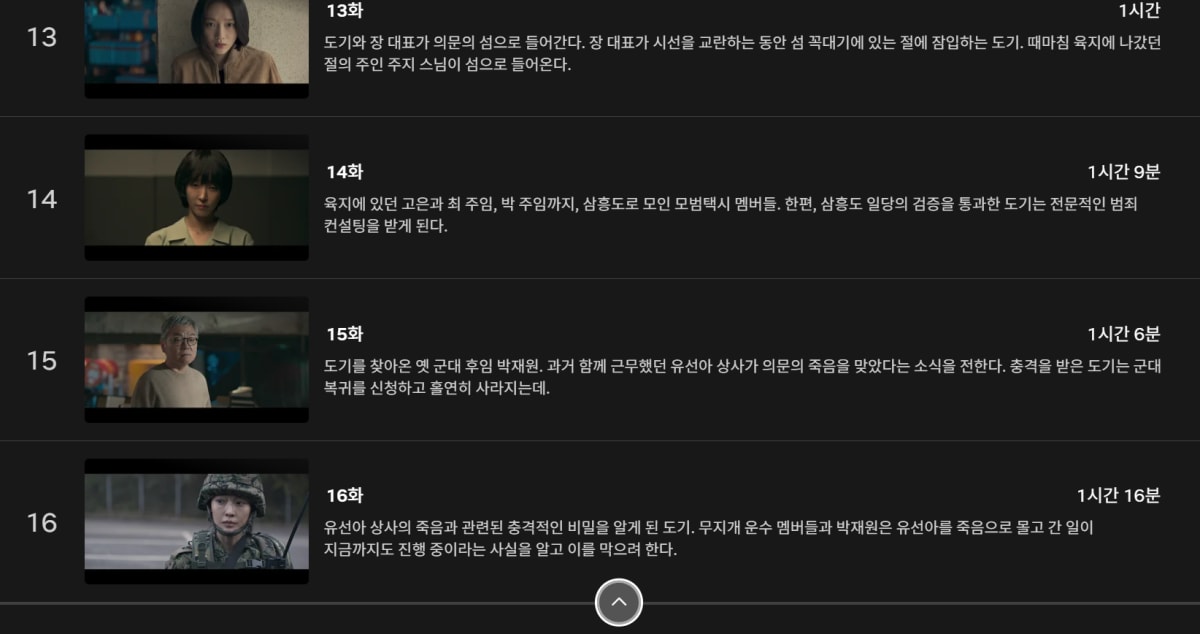
Most K-Dramas are 16 episodes of roughly 60–75 minutes each — the equivalent of a long film or a very focused limited series. The story begins and ends. There is no renewal for a second season; no "this was just setup for something bigger." The writers know where they're going from the start.
This creates a specific kind of narrative commitment. A show like My Mister or Stranger isn't improvising toward a conclusion — it's executing one. The early episodes contain seeds that only make sense in the final episodes. Rewatching the beginning after finishing a K-Drama is often a completely different experience.
The Emotional Architecture
K-Drama uses a specific pattern of emotional withholding and release that differs from Western television's tendency toward faster gratification.
The first third of a K-Drama typically builds: circumstances, characters, obstacles. Emotional tension accumulates. The middle section tightens the obstacles and raises the stakes — the moment when things look least resolvable. The final third releases: the confrontations, the confessions, the resolutions.
Within episodes, the same architecture operates at smaller scale. A scene will build quiet tension across several minutes before the moment — the look, the word, the gesture — that the tension has been building toward. This is not slow pacing for its own sake. It's a specific understanding of how emotional payoff works: the longer and more honestly the difficulty is held, the more powerful the release.
Tip — The "almost" moment: K-Drama has a specific technique — sometimes called the "almost" — where two characters come close to a significant moment (confession, kiss, confrontation) and something interrupts. This is used more in romance than other genres and is sometimes criticized as formulaic. What makes the best K-Dramas different is that the "almost" reveals character rather than just delaying plot. Watch for what the interruption is, and what each character does after.
The Tropes
K-Drama has recognizable recurring conventions. Understanding them helps you engage with what the show is doing rather than being confused or impatient with it.
손목 잡기 — The Wrist Grab
A character grabs another character's wrist to stop them from leaving. One of K-Drama's most iconic gestures, used primarily in romantic contexts to signal intensity of feeling that social convention won't let the character express directly. It's criticized by some viewers as a problematic power dynamic; others read it as a specific emotional vocabulary. Understanding it as a convention rather than a naturalistic gesture helps.
오해 — The Misunderstanding
A significant portion of K-Drama conflict is generated by misunderstandings that could be resolved by one conversation. This is sometimes frustrating to viewers expecting Western television's more direct character communication. It becomes more legible when you understand that Korean communication norms genuinely differ — the direct confrontation that Western characters default to is not the first response in Korean social interaction. The misunderstanding isn't a lazy plot device; it reflects something real about how difficult direct communication is in a culture built on hierarchy and face-saving.
재벌 남자주인공 — The Chaebol Male Lead
A wealthy heir, often arrogant and initially cold, who falls for a woman of lower social status. This is K-Drama's most commercially reliable romance template. It draws on Korean cultural anxiety about wealth inequality while simultaneously providing fantasy of upward mobility and of love that transcends class. Its persistence in the genre reflects something real about Korean society's preoccupations.
2차 남자 (Second Lead Syndrome)
The male character who is clearly better for the female lead in every practical sense but who she doesn't end up with. K-Drama fandoms have a specific term — second lead syndrome (2차 남주 신드롬) — for the frustration of wanting the second lead to win. The best K-Dramas use this structure intentionally: the second lead represents the safe, conventional choice; the male lead represents risk, growth, and something harder to name.
시간 점프 — The Time Jump
A common final-episode technique: the narrative jumps forward in time — months or years — to show where the characters end up. Used well, it provides closure and allows a moment of earned happiness. Used lazily, it bypasses the work of actually resolving the story's complications.
The Cultural Layer
관계 언어 — Relationship Language
Korean drama's emotional texture is inseparable from the relationship language beneath it. The shift from formal to informal speech (존댓말 to 반말) between characters is a significant event — it marks a relationship becoming closer, more equal, more intimate. When a character in K-Drama switches to informal speech with someone for the first time, it's not a casual moment.
Similarly, the shift from calling someone by their formal title to using their name — or to using a relationship title like 오빠 or 언니 — is charged with meaning that the subtitles often can't fully convey.
눈치 and What Isn't Said
Korean communication in K-Drama operates with a significant proportion of what isn't said directly. Characters signal, imply, and communicate through action and silence in ways that Western television characters don't. A character pouring someone tea in a specific way, or choosing not to leave a room, or looking at something and then away — these are communications in K-Drama that the narrative expects you to read.
This is connected to 눈치 (nunchi) — the Korean concept of reading the emotional state of a situation without being told. K-Drama rewards this capacity in its viewers. The viewers who find K-Drama "slow" are often viewers who haven't yet learned to read the silence.
정 (Jeong) — The Deepening Bond
Korean has a word — 정 (jeong) — that doesn't translate neatly into English. It refers to the feeling of deep attachment that develops over time between people who have been through things together. It's not romance, exactly, and not friendship, exactly — it's something that encompasses both and is specific to Korean emotional vocabulary.
K-Drama relationships are often built around 정 accumulating. The couple in My Mister doesn't fall in love in a conventional sense — they develop 정 over sixteen episodes of quiet proximity and mutual witnessing. Understanding what 정 is changes how you read that relationship.
Tip — Subtitle limitations: K-Drama subtitles on streaming platforms are professional but imperfect. The formal/informal speech distinction is rarely marked. Relationship titles are often translated by role ("oppa," "older brother") rather than by emotional meaning. The cultural weight of specific words — 정, 눈치, specific honorifics — is often lost entirely. Reading about these concepts in advance (the Language section of this site is a useful start) makes the viewing experience substantially richer.
What K-Drama Does Better Than Most Television
The slow-burn romance. K-Drama has no peer at the construction of romantic tension across a long run. The restraint, the accumulation of feeling, the calibration of when to release — the best K-Drama romances deliver an emotional payoff that most Western television can't match.
Female friendship. K-Drama has a strong tradition of depicting female friendships with genuine depth — Be Melodramatic, Reply 1988, Twenty-Five Twenty-One, among others. The emotional intelligence applied to romance extends to friendship.
The ensemble. Secondary characters in K-Drama receive more attention and development than in most comparable Western television. The world around the central characters feels inhabited.
Taking its own conventions seriously. The best K-Dramas engage with their genre conventions — the wrist grab, the misunderstanding, the chaebol romance — with self-awareness that makes familiar material feel fresh.
Comments
Inappropriate comments may be deleted.
Log in to leave a comment.
No comments yet. Be the first!