
Oldboy (올드보이): A Classic of World Cinema
The film that announced Korean cinema to the world — twenty years before Parasite made it undeniable.
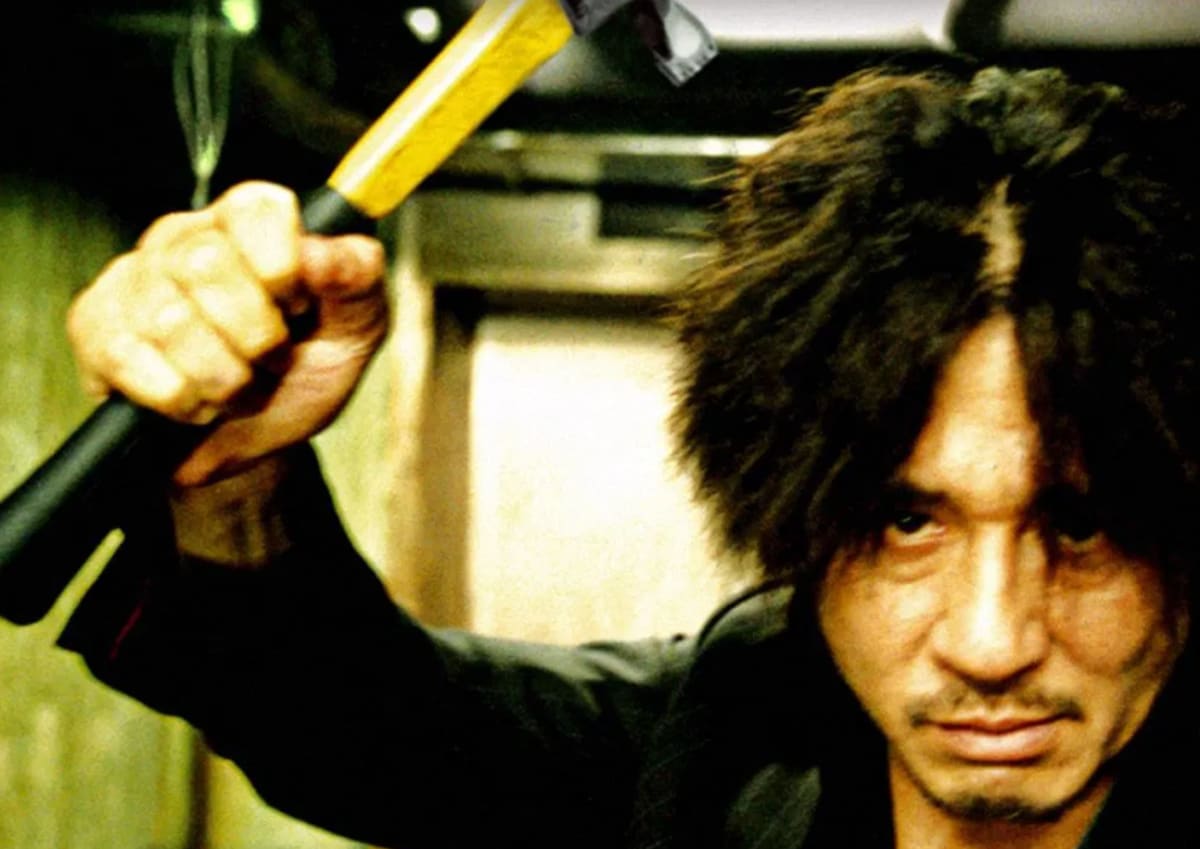
올드보이 won the Grand Prix at 칸 영화제 (Cannes) in 2004. 쿠엔틴 타란티노 (Quentin Tarantino), the jury president, reportedly pushed for the Palme d'Or. The film's director, 박찬욱 (Park Chan-wook), was then a filmmaker known primarily in 한국 (Korea). The Korean cinema that followed — the international attention, the festival presence, the gradual global recognition — can trace a significant part of its trajectory to the moment 올드보이 sat in that 칸 competition. This is where the world noticed.
What the Film Is
올드보이 (2003) is the second film in 박찬욱's 복수 3부작 (Vengeance Trilogy), following 복수는 나의 것 (2002) and preceding 친절한 금자씨 (2005).
오대수 (Oh Dae-su) is an unremarkable middle-aged man who is abducted one night and imprisoned in a private facility for fifteen years. No explanation. No charges. No contact with the outside world. He receives food, watches television, and trains obsessively against the walls. Then, as suddenly as he was taken, he is released — with money, a mobile phone, and a challenge: find out who imprisoned him and why within five days.
What follows is a revenge mystery that uses the mechanics of noir to deliver something that noir conventionally doesn't — a conclusion that implicates the very nature of the revenge impulse the film has been building.
The Cast
Actor | Character |
|---|---|
최민식 (Choi Min-sik) | 오대수 — the imprisoned man |
유지태 (Yoo Ji-tae) | 이우진 — the antagonist |
강혜정 (Kang Hye-jung) | 미도 — the sushi chef 오대수 encounters after release |
최민식's performance is the film's center — a physical, psychological, and emotional investment over 120 minutes that ranges from feral to broken to something harder to name. It's considered one of the finest performances in Korean cinema.
The Formal Choices
The corridor fight. A single continuous take — no cuts — of 오대수 fighting through a corridor of opponents with a hammer and his fists. The sequence runs approximately three minutes. The brutality is unglamorous: he's exhausted from the start, barely able to stand by the end. The take's length is the point — it refuses to let the violence be choreographically entertaining. It became one of the most discussed sequences in contemporary cinema.
The visual palette. Blues, greys, and sudden eruptions of color. The production design of the private prison — claustrophobic, textured, lived-in over fifteen years — contrasts with the city outside in ways that encode the psychological state of the protagonist.
The 군만두 (dumplings). A recurring detail about food that becomes one of the film's most significant clues — one of cinema's more elegant deployments of what Chekhov's gun principle means in a mystery structure.
The Source Material
올드보이 is based on a Japanese 만화 (manga) series by 쓰치야 가론 (Garon Tsuchiya, story) and 미네기시 노부아키 (Nobuaki Minegishi, art), published 1996–1998. 박찬욱's film takes the 만화's premise — a man imprisoned and released without explanation — and radically transforms the story, characters, and resolution.
The Western Remake
Spike Lee directed an American remake of 올드보이 in 2013. The remake was critically and commercially unsuccessful — generally cited as an example of why Korean films resist direct remake. The social and cultural context that makes the original meaningful is difficult to transplant.
The Trilogy Context
복수는 나의 것 (2002) — the most politically grounded; the most formally austere
올드보이 (2003) — the most propulsive and formally spectacular
친절한 금자씨 (2005) — the most visually stylized; the most explicitly about the limits of revenge
Each film examines revenge from a different angle and concludes that revenge doesn't deliver what its practitioners believe it will. 올드보이's conclusion is the trilogy's most explicit statement of this.
Tip — 먼저 보고 읽기: The specifics of 올드보이's resolution are its most discussed element, and knowing them in advance significantly changes the experience. Go in knowing only: a man is imprisoned for fifteen years for reasons he doesn't understand, and is then released. Everything else is better discovered.
Key Facts
Director | 박찬욱 (Park Chan-wook) |
Year | 2003 |
Runtime | 120 minutes |
Language | Korean |
Based on | 만화 by 쓰치야 가론 / 미네기시 노부아키 |
Awards | 칸 영화제 Grand Prix 2004 |
Note | Not recommended for viewers sensitive to extreme content |
Next up: 왕의 남자 →
Comments
Inappropriate comments may be deleted.
Log in to leave a comment.
No comments yet. Be the first!