
K-Pop History (K-Pop 역사): From 1st to 4th Generation
How Korean pop music went from a domestic experiment in the 1990s to the most organized cultural export machine in the world.
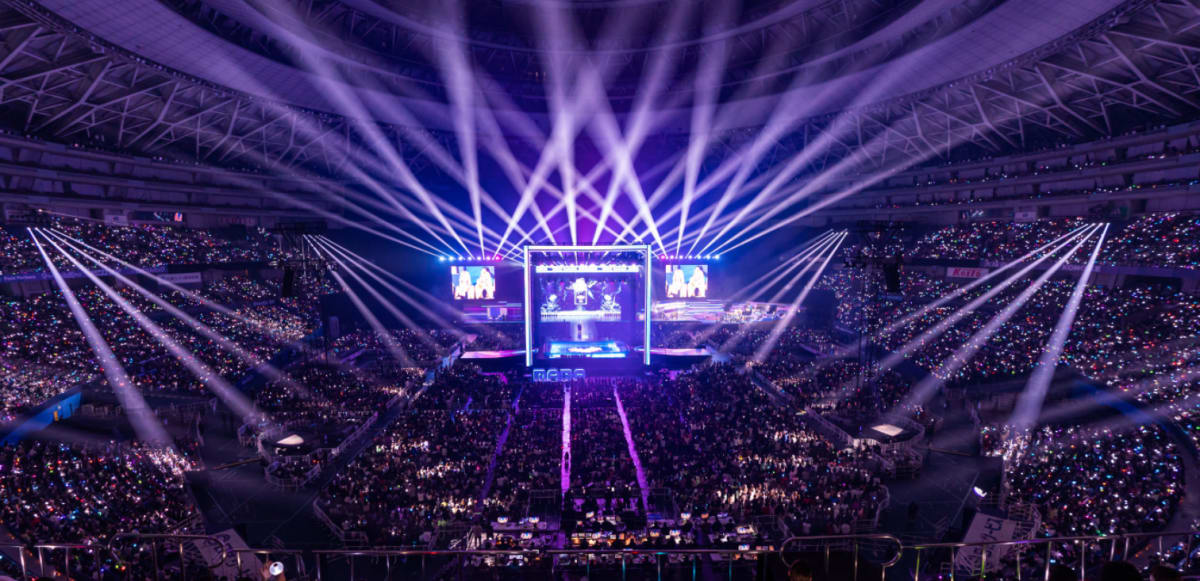
K-Pop didn't arrive fully formed. What looks today like a polished global industry was built in stages — each generation of artists inheriting what came before, pushing further, and leaving behind a model that the next wave would either refine or break. Understanding the generations isn't just music history. It's the story of how a small country figured out how to make culture travel.
Before the Generations: The Context
In the early 1990s, South Korea's music industry was dominated by ballads and trot (트로트) — a genre of Korean popular music with roots in the Japanese colonial period. Idol culture as we know it didn't exist. Teenagers weren't being recruited and trained in large entertainment companies. Music didn't look like choreography.
Two things changed that. The first was Seo Taiji and Boys (서태지와 아이들), who debuted in 1992 and introduced hip-hop, rap, and synchronized dance performance to Korean pop audiences. They weren't idols in the current sense, but they demonstrated that Korean youth audiences wanted something completely different from what they were being given.
The second was Lee Soo-man (이수만), the founder of SM Entertainment, who studied American music production in the early 1990s and returned to Korea with a blueprint: systematically recruit, train, and develop young performers into polished entertainers — not just musicians, but complete packages of singing, dancing, visual identity, and fan relationship management.
What followed was the idol generation system. Four generations so far. Still running.
1st Generation: The Foundation (1996–2004)
What defined it: The birth of the idol system. Groups trained by management companies, with carefully constructed visuals, synchronized choreography, and deliberate fan engagement. The infrastructure being built for the first time.
Key acts: H.O.T., S.E.S., Shinhwa, g.o.d, Fin.K.L, BoA
H.O.T. (에이치오티) is generally considered the first K-Pop idol group in the modern sense — recruited, trained, and launched by SM Entertainment. Their debut was engineered with the fan relationship architecture that would become standard: fandom name (White Angels), official lightstick color, organized fan clubs. The template was being invented in real time.
BoA (보아) represents the generation's most significant international ambition. Debuting in 2000, she was trained specifically for the Japanese market — learning Japanese from scratch, becoming one of the first Korean acts to break into Japan's notoriously closed pop market. The model of targeting specific international markets with deliberately localized acts would echo through every subsequent generation.
The first Hallyu. First-generation K-Pop spread across Asia through drama soundtracks and the beginnings of internet fan communities. Fans in China, Japan, Taiwan, and Southeast Asia were connecting around Korean acts before the word "Hallyu" had been widely coined.
Tip — Why generations matter to fans: In K-Pop fan culture, knowing the generations is a form of literacy. Referencing which generation a group belongs to signals how long you've been paying attention and what era of K-Pop shaped your entry point. First-generation fans have a particular status as elders of the fandom ecosystem.
2nd Generation: Going Bigger (2004–2012)
What defined it: Expansion. The idol system matured and scaled — more groups, higher production values, the first real international breakthroughs. The three major agencies (SM, YG, JYP) consolidated dominance. Japan became a serious market, not just an experiment.
Key acts: TVXQ, Super Junior, Girls' Generation, SHINee, 2NE1, Big Bang, KARA, f(x), Wonder Girls
TVXQ (동방신기) became the defining 2nd generation act — a five-member group that broke through in Japan to a degree no Korean act had previously achieved, regularly selling out Tokyo Dome and becoming legitimate J-Pop crossover stars. Their fanbase (Cassiopeia) became one of the most organized and loyal fandoms in K-Pop history.
Big Bang (빅뱅) introduced a different model: an idol group with genuine creative autonomy, where members wrote and produced much of their own music. G-Dragon in particular established that K-Pop could accommodate individual artistic identity within the group system — an idea that would become more common later.
Girls' Generation (소녀시대) became the most iconic girl group of the era — nine members, a visual and musical uniformity that was distinctly SM, and the choreography of "Gee" and "I Got a Boy" that spread across Asia and early YouTube. They represent the apex of the second generation girl group.
2NE1 (투앤이원) represented YG's deliberate counterpoint to SM's aesthetic — edgier, less conventionally feminine, heavier on hip-hop influence. CL's frontwoman persona established a template for a different kind of idol charisma.
The Wonder Girls (원더걸스)' US attempt (2009) is worth noting specifically: they were sent to tour with the Jonas Brothers in an attempt to break the American market directly. It didn't work. The lesson — that direct Western market entry was harder than building international fanbases online — would shape how later generations approached global expansion.
3rd Generation: The Global Breakthrough (2012–2017)
What defined it: YouTube, social media, and streaming made it possible for fans anywhere to become fans simultaneously. The international fanbase stopped being a secondary audience and became central to the model. For the first time, K-Pop groups were building genuine followings in Europe, South America, and North America — not through physical touring, but through content.
Key acts: EXO, BTS, TWICE, Red Velvet, GOT7, MONSTA X, Wanna One, BLACKPINK (debuted 2016)
EXO (엑소) was SM's flagship 3rd generation group — twelve members at debut (split between Korean-Chinese subunits), an elaborate mythology, and a production scale that set a new benchmark. They dominated the Korean domestic market for several years and established the concept of a group having an internal fictional universe (SM would develop this further with subsequent groups).
BTS (비티에스) is the defining act of the third generation and arguably of K-Pop entirely. What made them different wasn't just the music — it was the social media strategy, the emotional directness of their communication with fans, the narrative of young people struggling against expectations, and the consistent quality of their creative output over years. They broke the American market in a way all previous attempts hadn't, and did it from the bottom up — fan communities organizing streaming parties, voting campaigns, and charting strategies that no Western pop infrastructure had been built to handle.
TWICE (트와이스) defined the third-generation girl group aesthetic — high energy, approachable, optimistic, with a visual identity calibrated for wide appeal across Asia. Their fandom (ONCE) built one of the most commercially effective support structures in the girl group ecosystem.
Tip — The BTS effect: BTS changed K-Pop's international model permanently. Before BTS, the assumption was that breaking America required an American label partnership, English-language music, or both. BTS demonstrated that it could be done in Korean, from Seoul, by building a direct emotional relationship with a global fanbase. Every group that debuted after 2018 operates with this as the baseline assumption.
4th Generation: The Post-BTS Landscape (2018–Present)
What defined it: A generation that grew up watching 3rd generation K-Pop, trained by companies that had studied what worked, and debuted into an already-globalized market. Artistic ambition, conceptual sophistication, and self-production became defining features for at least some acts. The Western market is no longer a goal — it's a given.
Key acts: STRAY KIDS, ATEEZ, TOMORROW X TOGETHER (TXT), ITZY, aespa, ENHYPEN, NewJeans, IVE, LE SSERAFIM, (G)I-DLE, SEVENTEEN (debuted 2015, often discussed alongside 4th gen)
Stray Kids (스트레이키즈) brought self-production back as a defining feature — their production unit 3RACHA (Bang Chan, Changbin, Han) writes and produces a significant portion of their discography, following the Big Bang model with a more hardcore sound. Their global fanbase (STAY) built organically, particularly in Western markets.
Aespa (애스파) introduced SM's most ambitious concept yet: a fictional metaverse in which each member has a corresponding AI avatar (æ-member, 아이-멤버), with a developing narrative mythology. Whether the concept lands depends on who you ask — but it's the most explicit attempt to build transmedia storytelling into the core of a K-Pop group identity.
NewJeans (뉴진스) arrived in 2022 and did something unusual: deliberately moved away from the maximalist production, narrative concepts, and idol-system choreography that defined 4th generation K-Pop in favor of something simpler, warmer, and more influenced by late-1990s and early-2000s R&B aesthetics. Their success suggested that the market had appetite for a different direction.
The question for the 5th generation — already being debated — is what comes after globalization becomes complete. K-Pop's next challenge isn't breaking new markets. It's what the music and the system become when the entire world is already watching.
The Generational Timeline
Generation | Years | Defining feature | Landmark moment |
|---|---|---|---|
1st | 1996–2004 | Idol system invented | H.O.T. debut (1996) |
2nd | 2004–2012 | Scaling and Japan | TVXQ at Tokyo Dome |
3rd | 2012–2017 | Global social media breakthrough | BTS Billboard Hot 100 (2020) |
4th | 2018–present | Post-globalization, self-production, concept sophistication | NewJeans redefining the aesthetic (2022) |
What Stays Constant Across Generations
For all the change, certain features of K-Pop have remained consistent since the first generation:
The idol-management relationship — groups are developed by companies, not self-organized
Synchronized performance as a core skill — choreography is not optional
Fandom as a structured community — with names, colors, and organized participation
The comeback cycle — regular releases rather than album-based careers
Asian markets as home base — however global K-Pop becomes, the Korean and East Asian markets remain central
Understanding these constants helps make sense of K-Pop's specific character — why it works the way it does, why the fan relationships are so intense, and why the system keeps producing successful acts even as individual groups rise and fade.
Comments
Inappropriate comments may be deleted.
Log in to leave a comment.
No comments yet. Be the first!