
PSY (싸이): The Man Who Took K-Pop Global
How one song, one dance, and one unusually self-aware Korean pop star changed what the world thought was possible.
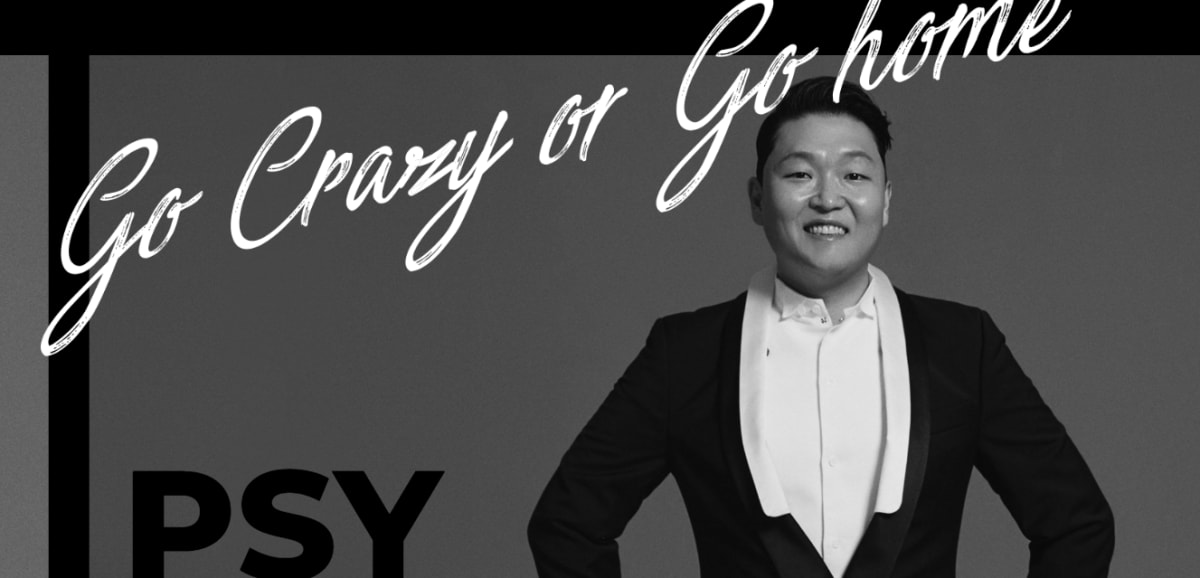
"Gangnam Style" hit one billion YouTube views in December 2012 — the first video ever to do so. PSY was 34 years old, on his sixth studio album, and had spent his career being the disruptive outsider in a Korean pop industry that preferred polish and deference. He was the wrong person, at the wrong age, with the wrong image, making exactly the right song at exactly the right moment. That it worked changed everything — and left PSY in the unusual position of being the man who opened a door he himself couldn't walk through.
Who PSY Is
PSY (Park Jae-sang, 박재상) was born in 1977 in Gangnam, Seoul — yes, that Gangnam — the son of a businessman. He studied business administration at Berklee College of Music in Boston and at University of California, Berkeley, before returning to Korea to pursue music.
He debuted in 2001 with PSY from the PSYcho World! — a dance-pop album that was immediately controversial: the Korea Media Rating Board considered it too provocative for public broadcast. The pattern continued. PSY's career was defined by deliberate rule-breaking in an industry that ran on strict image management.
The Career Before "Gangnam Style"
Five albums before "Gangnam Style." Consistent domestic success. A reputation as a live performer and comedian-entertainer hybrid who could fill arenas but didn't export. He was signed to YG Entertainment in 2010 — a label that valued his charisma and commercial instinct even if his image didn't fit YG's typical aesthetic.
He also served in the Korean military twice — required by law, but unusually he had to repeat service after his first stint was ruled improper due to a work contract. It's mentioned because PSY has always been willing to be the person K-Pop is not: older, heavier, self-deprecating, unafraid of embarrassment.
"Gangnam Style" (2012)
Released on July 15, 2012. The song is a satire of the Gangnam district in Seoul — specifically of the aspirational culture of people who affect the wealthy, sophisticated "Gangnam lifestyle" they may not actually have. PSY is both satirizing the type and performing it, which gives the song its specific tension.
The horse-riding dance became the meme. The production — bright, propulsive synth-pop with a hook that was simultaneously catchy and ridiculous — traveled perfectly across language barriers. The music video's absurdist visual humor required no translation.
What happened next was unprecedented: viral spread through YouTube and early social media at a speed that hadn't been seen before. Celebrities imitated the dance. News anchors performed it. Heads of state referenced it. It spent seven weeks at #2 on the Billboard Hot 100 (kept from #1 by Maroon 5's "One More Night" and Carly Rae Jepsen's "Call Me Maybe"). It won the MTV Europe Music Award for Best Video.
One billion YouTube views in December 2012. Eventually over four billion, making it one of the most-watched videos in the platform's history.
Tip — The Gangnam irony: "Gangnam Style" is a satire that most international listeners didn't realize was a satire. The song is making fun of Gangnam pretension — but the video's spectacle and the dance's joy meant it was received as pure celebration. PSY has been thoughtful in interviews about this gap: he intended the song to resonate with Koreans who understood the reference, and was genuinely surprised by how it traveled. The humor landed globally; the specific critique mostly didn't.
The Aftermath
"Gentleman" (2013) and "Hangover" (2014, featuring Snoop Dogg) followed. Neither replicated "Gangnam Style." This was expected — nothing replicates something like "Gangnam Style" — but the inability to sustain the Western crossover moment exposed the structural reality: PSY had opened the door to global attention for Korean pop, but the industry that walked through it was different.
BTS, BLACKPINK, and the 3rd/4th generation K-Pop wave that followed had everything PSY didn't: youth, systematic fandom architecture, the idol system's long relationship-building machinery. PSY's moment was a cultural meteor strike. What followed was a sustained campaign.
PSY After PSY
He didn't disappear. PSY released PSY 9th in 2022 — a comeback after years away from the domestic Korean market — with "That That" (featuring and co-produced by BTS's Suga). The single was a major domestic hit, and its success was a reminder that PSY's instincts for what Koreans actually enjoy hadn't faded.
He also founded his own label, P Nation, in 2019 — signing artists including Crush, HyunA, and Dawn, positioning himself as the industry-outsider-turned-infrastructure. The label operates with the energy PSY has always had: less conventional K-Pop polish, more live performance and personality.
Why PSY Matters
PSY's place in K-Pop history is specific and often misunderstood. He didn't start the Hallyu wave — Korean pop had been building for over a decade. What he did was make it undeniable to a Western audience that hadn't been paying attention.
In doing so, he exposed both the potential and the gap: the world was willing to engage with Korean pop music, but it needed the right entry points. PSY was a one-time entry point; the idol system built the highways.
He also represents something K-Pop doesn't produce much of: the comedian-entertainer who refuses to be managed into palatability. That identity — older, self-aware, willing to be the punchline — is actually rare in an industry built on aspiration.
Comments
Inappropriate comments may be deleted.
Log in to leave a comment.
No comments yet. Be the first!