
Ssireum (씨름): Korea's Ancient Wrestling Tradition
Korea's oldest sport isn't taekwondo. It's two men gripping each other's cloth bands on a sandy ring, trying to make the other fall. It's been happening for over a thousand years.
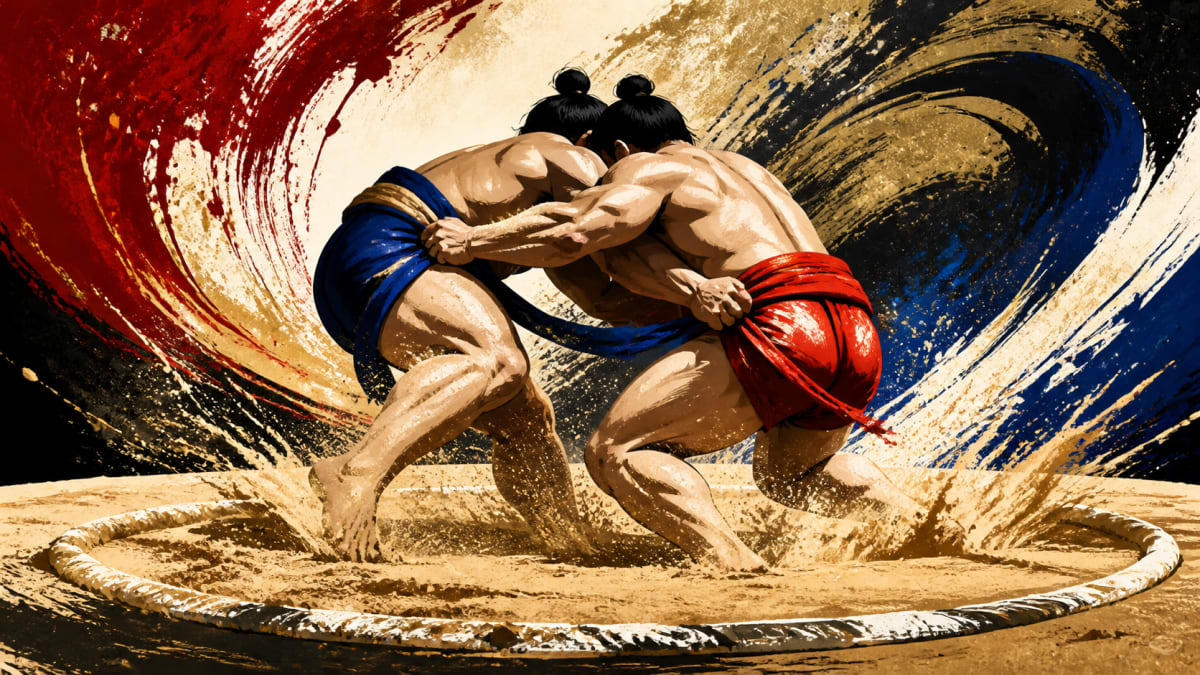
씨름 (ssireum) doesn't get the international attention of 태권도 (taekwondo) or the cultural cachet of 택견 (taekkyeon). It is not an Olympic sport. It doesn't have a global federation with 215 member nations. What it has is a documented history stretching back to the 4th century CE, a set of rules that haven't changed in any meaningful way across that entire span, and a persistent presence in Korean 문화 (culture) that no amount of modernization has fully displaced.
씨름의 기원 (Origins of Ssireum)
씨름 (ssireum) is Korea's traditional form of 레슬링 (wrestling) — one of the oldest continuously practiced 스포츠 (sports) on the peninsula. The earliest documented evidence appears in 고구려 (Goguryeo) 고분 벽화 (tomb murals) dating to the 4th and 5th centuries CE: paintings showing two figures gripping each other in postures that are immediately recognizable as 씨름 (ssireum). The 기술 (technique) depicted has not substantially changed in over 1,500 years.
Written records throughout the 고려 (Goryeo) and 조선 (Joseon) periods confirm 씨름 (ssireum) as a fixture of 민속 문화 (folk culture) — practiced particularly at 단오 (Dano), the traditional midsummer festival, where 씨름 경기 (ssireum competitions) were a central 행사 (event). 왕 (kings) and 양반 (aristocrats) watched; 평민 (commoners) competed. The sport crossed 계층 (class lines) in a way that few 조선 시대 (Joseon era) activities did.
Unlike Japanese 스모 (sumo) — which is embedded in Shinto ritual and ceremonial traditions — 씨름 (ssireum) has always been a 민속 스포츠 (folk sport): rooted in physical community rather than religious 의식 (ritual). This accessibility is part of why it persisted.
경기 방식 (How Ssireum Works)
두 선수 (two competitors) face each other on a 모래판 (sandy ring) — traditionally a circular sand-filled area. Each grips the other's 샅바 (satba) — a cloth band worn around the 허벅지 (thigh) and 허리 (waist). From this grip, the contest begins.
The objective is simple: throw or trip your opponent so that any part of their body 무릎 위 (above the knee) touches the ground. 씨름 (ssireum) does not allow 타격 (strikes) of any kind. The entire contest is decided through 힘 (strength), 균형 (balance), and 기술 (technique) — specifically the leverage generated through a defined vocabulary of 던지기 (throwing) and 걸기 (tripping) techniques.
경기 (Matches) are short — typically under a minute at the elite level, often over in seconds. Elite 씨름 선수 (athletes) are powerful and large, training with an emphasis on explosive 하체 (lower body) and 허리 (hip) strength. The 기술 체계 (technical system) shares elements with 올림픽 레슬링 (Olympic wrestling) but operates within a distinct vocabulary shaped by the 샅바 (satba) grip constraint.
체급과 천하장사 (Weight Classes and the Grand Title)
씨름 (ssireum) weight categories are named after Korea's 명산 (sacred mountains):
체급 (Weight Class) | 기준 (Weight) | 산 이름 (Mountain) |
|---|---|---|
태백급 (Taebaek) | 경량급 (Lightweight) | 태백산 (Mt. Taebaek) |
금강급 (Geumgang) | 중량급 (Middleweight) | 금강산 (Mt. Geumgang) |
한라급 (Halla) | 중량급 (Heavyweight) | 한라산 (Mt. Halla) |
백두급 (Baekdu) | 초중량급 (Super-heavyweight) | 백두산 (Mt. Baekdu) |
The most prestigious 타이틀 (title) in 씨름 (ssireum) is 천하장사 (Cheonha Jangsa) — literally "Strongest Under Heaven." It is awarded to the champion who defeats all 체급 우승자 (weight-class winners) in a single 대회 (tournament). The 천하장사 (Cheonha Jangsa) title carries deep cultural weight — the phrase itself appears in classical Korean 문학 (literature) and 민담 (folk tales) as the ultimate marker of physical excellence.
씨름의 쇠퇴와 부활 (Decline and Revival)
By the 1990s and 2000s, 씨름 (ssireum) had faded from mainstream 한국 스포츠 문화 (Korean sports culture). 프로야구 (professional baseball), 축구 (soccer), and eventually e스포츠 (e-sports) absorbed the viewing 관중 (audience). 씨름 (ssireum) 방송 (broadcasts) declined, and 대회 (competitions) lost 스폰서십 (sponsorship).
The revival came unexpectedly through 예능 텔레비전 (entertainment television). 씨름의 희열 (Joy of Ssireum), a 리얼리티 (reality) 프로그램 (program) broadcast in 2018, followed non-professional 선수들 (athletes) competing in a 토너먼트 (tournament) format. The format — accessible 선수들 (competitors), clear 규칙 (rules), genuine 긴장감 (tension) — became a genuine 히트 (hit). It reintroduced 씨름 (ssireum) to younger 시청자 (viewers) who had never seen a live 경기 (match).
The same year, 2018, 씨름 (ssireum) was inscribed on the UNESCO 인류무형문화유산 (Representative List of Intangible Cultural Heritage of Humanity) — jointly between South Korea and North Korea, one of the very few areas of formal 문화 협력 (cultural cooperation) between the two governments.
오늘날의 씨름 (Ssireum Today)
씨름 (ssireum) maintains a dedicated 팬층 (fanbase) and regular 방송 (broadcasts) through KBS and dedicated 스포츠 채널 (sports channels). The 대한씨름협회 (Korea Ssireum Association) runs structured 리그 (leagues) and 대회 (tournaments) throughout the year.
For visitors to Korea, the most accessible ways to experience 씨름 (ssireum):
단오 (Dano) 축제 (festival): Typically May–June — 씨름 경기 (ssireum competitions) are a central event at traditional 단오 행사 (Dano celebrations), particularly in 강릉 (Gangneung), which hosts a major 단오제 (Dano festival) recognized as UNESCO Intangible Cultural Heritage in its own right
천하장사 씨름대회 (Cheonha Jangsa competition): The premier annual 대회 (tournament) — televised and open to 관중 (spectators)
Key Facts
씨름 기원 (Origins) | 고구려 (Goguryeo) 고분 벽화 (tomb murals), 4th–5th centuries CE — over 1,500 years of documented history |
경기 방식 (Rules) | 두 선수가 서로의 샅바 (satba) 를 잡고 상대방의 무릎 위 신체 부위를 먼저 땅에 닿게 하면 승리; 타격 없음 |
체급 명칭 (Weight class names) | 태백·금강·한라·백두 — 한국의 명산 이름을 사용 |
천하장사 (Cheonha Jangsa) | "천하에서 가장 강한 자" — 모든 체급 우승자를 꺾은 선수에게 주어지는 최고 타이틀 |
유네스코 등재 (UNESCO inscription) | 2018년 — 남북한 공동 등재; 두 정부 간 공식 문화 협력의 몇 안 되는 사례 중 하나 |
씨름의 희열 (Joy of Ssireum) | 2018년 KBS 리얼리티 프로그램 — 비프로 선수 토너먼트 형식; 젊은 세대에게 씨름을 재소개한 전환점 |
스모와의 차이 (vs. Sumo) | 씨름은 종교·의식과 무관한 순수 민속 스포츠 — 일본 스모와 달리 계층·지역을 넘나드는 민간 경기로 발전 |
직관 기회 (Live viewing) | 강릉 단오제 (5–6월), 천하장사 씨름대회 (연중) — KBS 등 방송 중계 |
Comments
Inappropriate comments may be deleted.
Log in to leave a comment.
No comments yet. Be the first!