
Expressive Sound Words (의성어·의태어): Korea's Colorful Language
How Korean uses sound and repetition to paint vivid pictures of the world — and why it feels so alive.
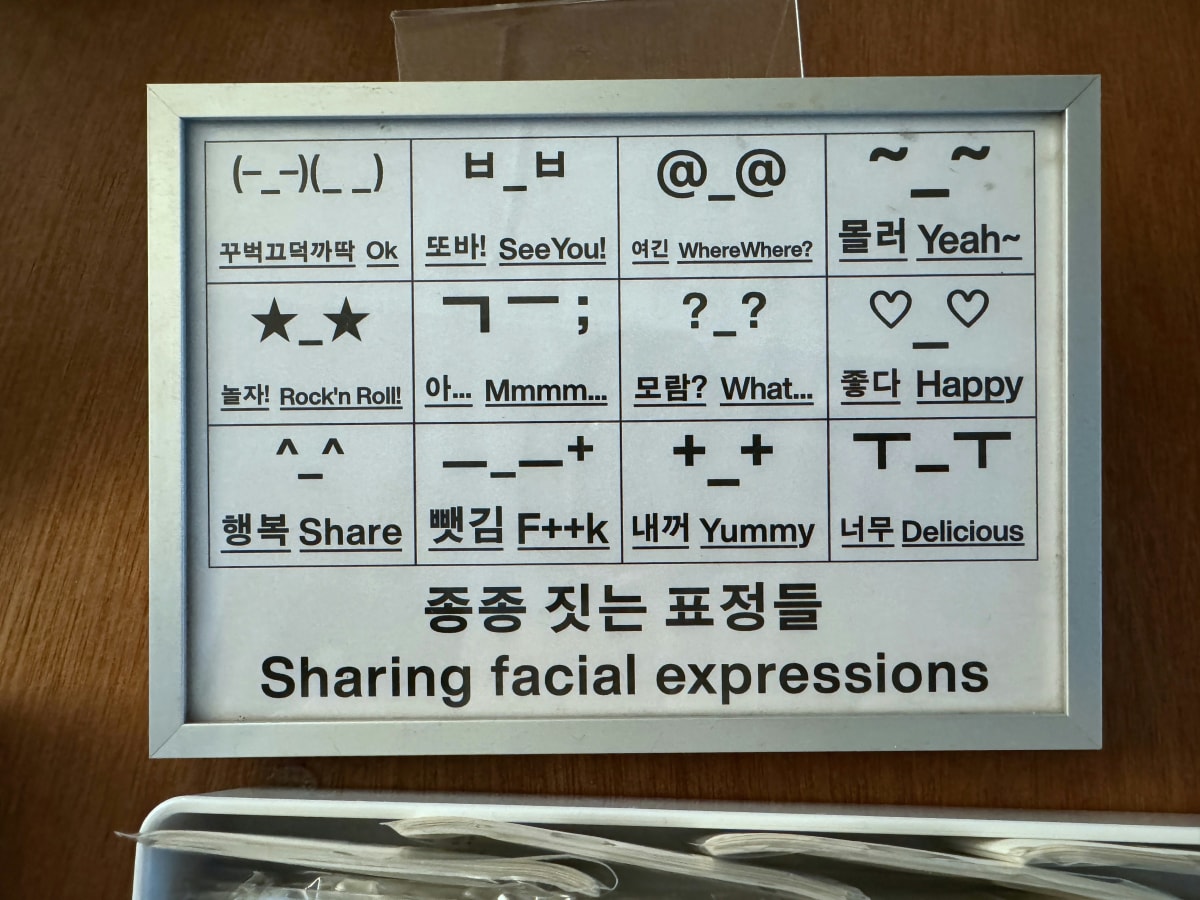
Every language has onomatopoeia — words that sound like what they describe. English has buzz, splash, crunch. But Korean takes this idea much further. It doesn't just capture sounds — it captures the way things move, the way they look, the way they feel in your body.
When a Korean webtoon shows a character's heart racing, the word that appears above their head isn't "nervous" or "excited." It's 두근두근 — a word that actually sounds like a heartbeat. When a pot of stew is bubbling on the stove, the subtitles don't say "boiling." They say 보글보글 — and you can hear the gentle gurgle just by saying it out loud.
This class of words is one of Korean's most distinctive features, and once you start noticing them, you'll find them everywhere.
Two Types of Expressive Words
Korean organizes these words into two categories:
의성어 (ui-seong-eo) — Sound words: words that mimic actual sounds
의태어 (ui-tae-eo) — State words: words that capture appearance, movement, or feeling — even when there's no sound involved
English has the first category. The second — words that visually and physically describe a state — is where Korean becomes genuinely unusual.
1. 의성어 — Sound Words
These work much like English onomatopoeia, except Korean has far more of them, and they're used constantly in everyday speech, song lyrics, and subtitles.
Animal sounds — and a note on how they differ from English:
Animal | Korean | Romanization | English equivalent |
|---|---|---|---|
Dog | 멍멍 | meong-meong | woof woof |
Cat | 야옹 | ya-ong | meow |
Rooster | 꼬끼오 | kko-kki-o | cock-a-doodle-doo |
Frog | 개굴개굴 | gae-gul-gae-gul | ribbit ribbit |
Tip — Animals sound different in every language: A dog in Korea says 멍멍, not "woof." Neither is wrong — both are human approximations of the same sound. Paying attention to animal sounds is actually a good way to internalize Korean phonetics, because the sounds are predictable and memorable. 멍멍 uses ㅓ and ㅇ — practice those vowels every time you see a dog.
Everyday sounds:
Sound | Korean | Romanization | What's happening |
|---|---|---|---|
Something bubbling | 보글보글 | bo-geul-bo-geul | Stew simmering gently on the stove |
Knocking | 똑똑 | ttok-ttok | Knocking on a door |
Rain falling hard | 주룩주룩 | ju-ruk-ju-ruk | Heavy rain running down a window |
Something crunching | 아삭아삭 | a-sak-a-sak | Biting into fresh vegetables |
Crying loudly | 엉엉 | eong-eong | Ugly crying, full volume |
Laughing hard | 하하 / 히히 | ha-ha / hi-hi | Open laughter / shy giggling |
2. 의태어 — State Words
This is where Korean gets remarkable. 의태어 describe things that make no sound at all — the way light moves, the feeling of a breeze, the sensation of your heart beating fast. There's no English equivalent as a category.
Light and movement:
Korean | Romanization | What it describes |
|---|---|---|
반짝반짝 | ban-jjak-ban-jjak | The way stars or gems sparkle and glimmer |
활활 | hwal-hwal | Flames burning big and freely |
솔솔 | sol-sol | A gentle breeze passing through |
살랑살랑 | sal-lang-sal-lang | Something swaying softly — leaves, a skirt, a hand waving |
Physical and emotional feelings:
Korean | Romanization | What it describes |
|---|---|---|
두근두근 | du-geun-du-geun | Heart pounding — nervousness, excitement, anticipation |
설레설레 | seol-le-seol-le | Shaking the head slowly side to side |
쿨쿨 | kul-kul | Sleeping deeply and peacefully |
울렁울렁 | ul-leong-ul-leong | Stomach churning — nausea, anxiety, or butterflies |
포근포근 | po-geun-po-geun | Soft and cozy — like sinking into a warm blanket |
Tip — 두근두근 vs. 설레다: These two often appear together in K-Drama and K-Pop. 두근두근 is the physical sensation — a pounding heartbeat. 설레다 is the emotion — the flutter of excitement or anticipation. Korean has separate words for the body's reaction and the feeling behind it. English usually collapses both into "excited."
3. The Doubling Pattern
You've probably noticed: almost all of these words repeat themselves. 보글보글, 반짝반짝, 두근두근. This isn't coincidence — it's a rule.
In Korean, repeating a word intensifies and extends the experience it describes:
반짝 — a single flash of light
반짝반짝 — light that keeps sparkling, over and over
보글 — one bubble rising
보글보글 — the continuous, cozy sound of something simmering
The repetition makes the word feel like it's happening in time — ongoing, rhythmic, alive. It's one reason Korean song lyrics and webtoon captions feel so vivid even without translation.
Tip — Reduplication in K-Pop lyrics: Next time you listen to a K-Pop song, listen specifically for repeated syllables. You'll start catching 두근두근, 반짝반짝, 살랑살랑 — these aren't filler. They're doing specific sensory work that a single abstract emotion word couldn't do. BTS's catalog alone is full of them.
4. Where to Find Them in K-Content
K-Webtoons and manhwa: Sound and state words appear as visual text effects — floating near a character's chest when their heart races, rising from a pot of food, drifting around a scene to set mood. They function like a soundtrack written in letters.
K-Drama subtitles: When a Korean drama uses subtitles in Korean, these words show up constantly — especially in cooking scenes, emotional close-ups, and action sequences. Even if you can't read everything else, spotting 두근두근 or 보글보글 gives you a direct window into what the character is experiencing.
K-Pop lyrics: Many of the most memorable phrases in Korean pop music are built around 의성어 and 의태어 — not just because they sound good, but because they communicate feeling instantly, across language barriers. A non-Korean speaker who doesn't understand a word of the lyrics can still feel 두근두근.
A Starter List to Keep
These are worth memorizing — not because you'll need to use them immediately, but because you'll start recognizing them everywhere:
Korean | Romanization | The feeling |
|---|---|---|
두근두근 | du-geun-du-geun | Heart pounding with anticipation |
보글보글 | bo-geul-bo-geul | Something bubbling warmly |
반짝반짝 | ban-jjak-ban-jjak | Sparkling, glittering |
살랑살랑 | sal-lang-sal-lang | Swaying gently |
엉엉 | eong-eong | Crying hard |
똑똑 | ttok-ttok | Knock knock |
주룩주룩 | ju-ruk-ju-ruk | Rain pouring down |
쿨쿨 | kul-kul | Sleeping deeply |
활활 | hwal-hwal | Flames burning bright |
포근포근 | po-geun-po-geun | Soft, warm, cozy |
Try It Right Now
Say 두근두근 out loud, slowly, then at a normal pace.
Notice how the "du-geun" sounds like a heartbeat — the "du" is the beat, the "geun" is the faint echo after it. Then say it twice in a row, the way it's actually used: 두근두근. You can feel what it means without being told.
That's the whole point of these words. They don't just describe an experience — they recreate it, briefly, in your mouth.
Now open any K-Drama or K-Pop video and watch for five minutes. Every time you spot one of these words — on screen, in lyrics, in subtitles — you're seeing Korean do something most languages can't.
Comments
Inappropriate comments may be deleted.
Log in to leave a comment.
No comments yet. Be the first!