
Genre Guide: Horror (호러)
Ghosts with unfinished business, family trauma made supernatural, and the specific dread that comes from societies that don't talk about things.
Korean horror has a different center of gravity from Western horror. American horror is often about external threat — the killer, the monster, the alien, the haunted house. Korean horror tends to locate the terror inward and backward: in unresolved grief, suppressed family secrets, social guilt, and the specific kind of dread that accumulates when things that should be spoken remain unspoken for generations. The ghost in a Korean horror film is almost always a symptom of something the living haven't dealt with.
The Cultural Roots
Korean horror draws heavily on indigenous folk beliefs — particularly the concept of 원한 (wonhan): the resentment and unresolved energy of the dead who died in circumstances of injustice, grief, or violent death. A wonhan spirit cannot pass on without resolution; it haunts the living until what was unfinished is addressed.
This is not just aesthetic backdrop. It's the structural engine of most Korean horror: the horror exists because something was done wrong to someone, and that wrongness persists as a supernatural force until it's acknowledged. Korean horror films often end not with the monster being destroyed but with the truth being revealed — which is what allows the ghost to finally leave.
The female ghost (여귀, yeogwi) — a woman who died in unjust circumstances, often violence or abandonment — is the most persistent figure in Korean horror. Her face pale, her hair long and dark, her presence an accusation: you did this, you know you did this, and you haven't admitted it. The visual language comes from traditional Korean beliefs about the dead and was formalized by Japanese horror films in the 1990s before being absorbed into and transformed by Korean cinema.
Essential Korean Horror Films
A Tale of Two Sisters (장화, 홍련, 2003)
Director: Kim Jee-woon
A psychological horror film about two sisters returning home to an oppressive stepmother and a disturbed father. A Tale of Two Sisters operates through dread, implication, and visual disorientation rather than overt shock. The horror is largely internal — a family system that is broken in ways that cannot be straightforwardly described — and the film uses this to explore grief, guilt, and the stories families tell themselves.
It was the first Korean horror film to receive wide theatrical release in the United States and remains one of the most formally accomplished Korean horror films. The reveal in the third act recontextualizes everything before it.
The Host (괴물, 2006)
Director: Bong Joon-ho
A monster is released into Seoul's Han River — created by chemicals dumped by a US military base — and abducts a young girl. Her dysfunctional family attempts a rescue.
The Host is less straightforward horror than a genre hybrid: monster film, family drama, political satire about US-Korea relations, and dark comedy simultaneously. It's an essential Korean film precisely because of what it does with its genre materials — the monster is not the real horror. The institutional failures, the government incompetence, the US military's role, and the class dynamics are. One of Bong Joon-ho's most acclaimed films domestically and internationally.
The Wailing (곡성, 2016)
Director: Na Hong-jin
(Also listed in the Thriller guide, because it genuinely inhabits both genres)
A provincial police officer investigates deaths in a mountain village following the arrival of a mysterious Japanese man. The Wailing is the most tonally complex film in this guide — three hours of escalating dread, dark comedy, and supernatural horror that deliberately refuses to reveal which explanation for its events is correct.
It's a film about interpretation — about the impossibility of knowing whether what's happening is natural, supernatural, or something else entirely — and about the specific horror of being unable to trust your own judgment when it matters most.
Viewer note: Extremely disturbing in places. Long (156 minutes). Not for first-time Korean horror viewers.
Train to Busan (부산행, 2016)
Director: Yeon Sang-ho
A zombie outbreak begins on a KTX train traveling to Busan. A father and daughter are among the passengers.
Train to Busan is the most accessible film in this guide and one of the most commercially successful Korean films internationally. It works as a straight genre film — propulsive, well-crafted, emotionally effective — while also functioning as class commentary (the people who survive are not always the people who should). The father-daughter relationship at its center is one of Korean cinema's most effective emotional anchors in recent memory.
Best starting point for viewers new to Korean horror.
Gonjiam: Haunted Asylum (곤지암, 2018)
Director: Jung Bum-shik
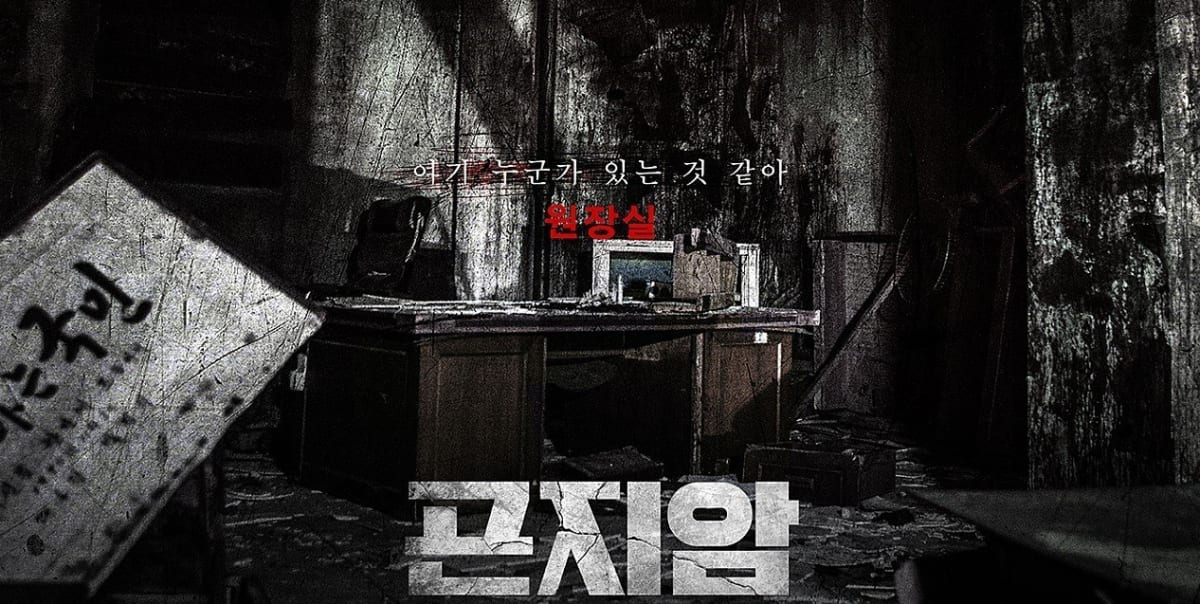
A found-footage horror film about a YouTube horror channel crew that breaks into an abandoned psychiatric hospital. Gonjiam is not an arthouse film — it's a well-executed genre exercise that became a significant domestic hit and demonstrated that found-footage horror could work in the Korean context. Based on a real abandoned hospital that was listed by CNN as one of the freakiest places on earth.
Recommended if: You enjoy found-footage horror and want to see a well-made Korean entry in the subgenre.
The Revenge Ghost Tradition
Several Korean horror films work within a specific tradition: the victim who returns to ensure accountability.
A Vengeful Ghost (귀신이 온다, loosely) — the concept appears across Korean folk horror and contemporary film. The ghost isn't malicious for its own sake; it's a corrective force. This is sometimes framed as horror, sometimes as tragedy, sometimes as dark justice.
The 2003 film Acacia (아카시아) by Park Ki-hyung and the original Whispering Corridors (여고괴담, 1998) series — set in high schools with oppressive environments — are early examples of this tradition in modern Korean film.
Korean Horror and Social Commentary
Like Korean thrillers, Korean horror films consistently use their genre structure to carry social observation:
The Host uses a monster to talk about US-Korea relations, government incompetence, and class
Train to Busan uses a zombie outbreak to examine selfishness vs. collective action
A Tale of Two Sisters uses psychological horror to examine family dysfunction and the ways families suppress truth
The Wailing uses supernatural horror to examine community scapegoating and the limits of knowledge
This isn't accidental. Korean genre filmmakers have consistently understood that genre provides cover — an entertainment framework that allows difficult ideas to be delivered to audiences who might resist them in straight dramatic form.
Tip — The Whispering Corridors series: The Whispering Corridors (여고괴담) anthology series — five films from 1998 to 2009, set in all-girl high schools — is one of Korean horror's longest-running and most culturally specific projects. The films use the high school setting to address education pressure, female friendship, institutional cruelty, and violence in a way that resonates specifically with Korean audiences. The first film in the series is a useful entry point for understanding how Korean horror uses familiar spaces — here, the school — as horror terrain.
Where to Start
If you want | Start with |
|---|---|
Best starting point overall | Train to Busan |
Psychological, formal horror | A Tale of Two Sisters |
Genre + social commentary | The Host |
Maximum challenge | The Wailing |
Found-footage | Gonjiam: Haunted Asylum |
Comments
Inappropriate comments may be deleted.
Log in to leave a comment.
No comments yet. Be the first!