
The King's Warden (왕과 사는 남자)
A story about loyalty, ordinary courage, and the exiled boy king nobody was supposed to protect.
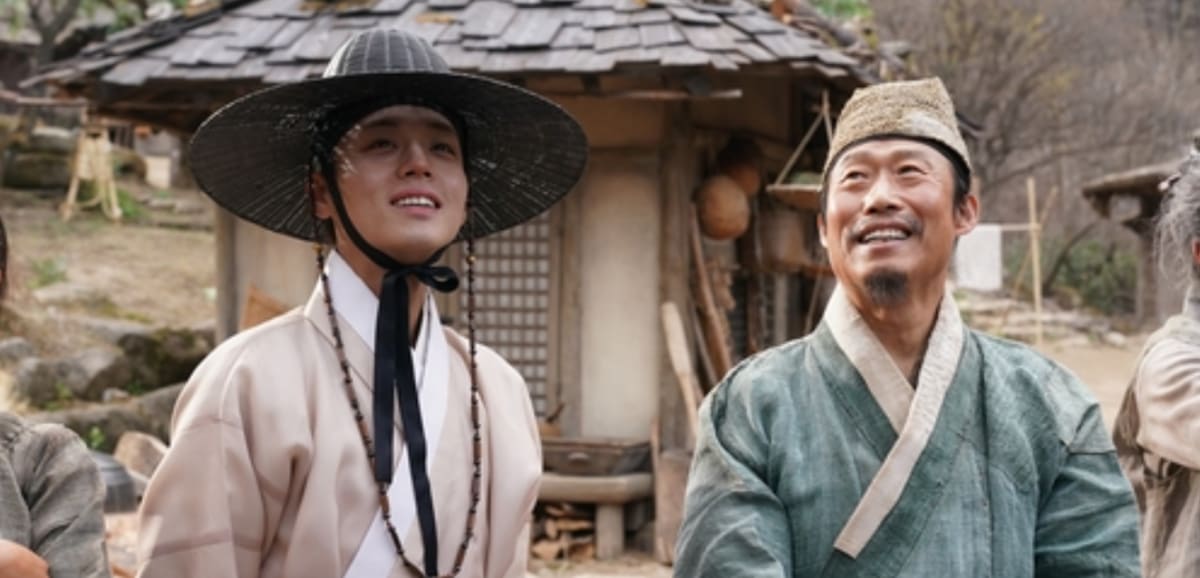
In February 2026, a Korean historical film about a village headman and a deposed teenage king became one of the biggest box office events in Korean cinema history — 10 million admissions in 31 days, eventually surpassing 명량 (Roaring Currents, 2014) as the highest-grossing Korean film by total revenue.
The film's Korean title — 왕과 사는 남자 (Wang-gwa Saneun Namja) — translates literally as "The Man Who Lives with the King." The English release title, The King's Warden, captures something the literal translation doesn't: that 엄흥도 (Eom Heung-do) is not merely cohabiting with royalty but standing guard over someone the rest of the world has abandoned. The King's Warden didn't arrive with the action spectacle of 명량 or the international prestige of 기생충 (Parasite). It arrived as a story about what ordinary people do when history puts an impossible choice in front of them.
The Historical Background
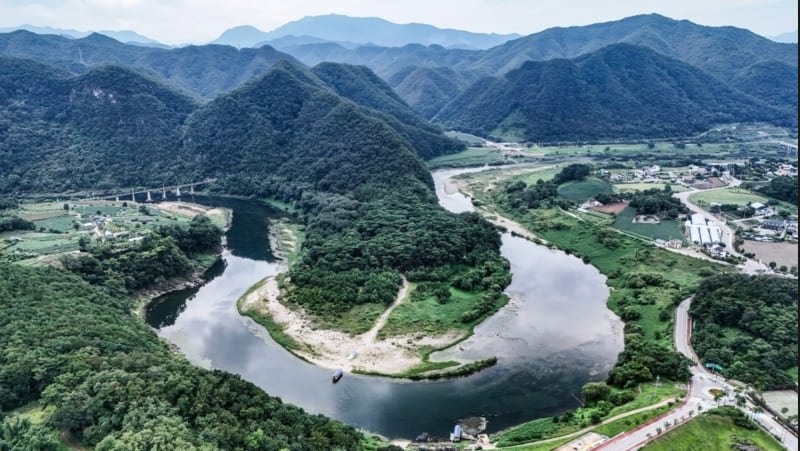
The film is set in the aftermath of the 계유정난 (Gyeyujeongan, 1453) — the coup staged by 수양대군 (Suyang Daegun), the king's uncle, which resulted in the assassination of key officials and the eventual seizure of the throne. The young king 이홍위 (Yi Hong-wi) — known to history as 단종 (Danjong) — was forced to abdicate in 1455 and was subsequently exiled to 청령포 (Cheongnyeongpo), a remote area in what is now 영월 (Yeongwol), Gangwon Province.
단종 was 15 when he was exiled. He died the following year under circumstances that remain historically contested — the official version being suicide, the popular historical memory being closer to execution by order.
What happened to him during those months of exile — the people who encountered him, who helped him, who risked everything for a king who had already lost — is the material The King's Warden is built from.
The Story
엄흥도 (Eom Heung-do, played by 유해진 / Yoo Hae-jin) is the village headman of 광천골 (Gwangcheongol), a poor settlement near 청령포. He is a practical man trying to keep his village alive under difficult circumstances. When the exiled 단종 arrives in his territory, the political logic is clear: the new power in 한양 (Hanyang, now Seoul) wants the boy isolated and, eventually, dead. Anyone who helps him risks their family, their village, everything.
엄흥도 helps anyway.
The film follows the months of their cohabitation — a man of the people and a boy who was king — and the relationship that develops between them. It's not a story about political strategy or court intrigue. It's about proximity: what happens when a person who has lost everything is seen, fed, sheltered, and treated as a human being rather than a political problem.
권력의 핵심 한명회 (Han Myeong-hoe, played by 유지태 / Yoo Ji-tae) — the political architect of 수양대군's coup — provides the film's antagonistic force. His presence in the film's world is the threat that gives 엄흥도's choices their weight.
단종 (played by 박지훈 / Park Ji-hoon) — formerly of Wanna One and now an established actor — carries the film's most emotionally demanding role: a teenage boy trained to be a king, stripped of everything, encountering ordinary life for the first time.
The Cast
Actor | Character | Note |
|---|---|---|
유해진 (Yoo Hae-jin) | 엄흥도 (Eom Heung-do) | The village headman; the film's moral center |
박지훈 (Park Ji-hoon) | 단종 이홍위 (King Danjong) | The exiled young king |
유지태 (Yoo Ji-tae) | 한명회 (Han Myeong-hoe) | The political powerbroker and antagonist |
전미도 (Jeon Mi-do) | 엄흥도의 아내 (Eom's wife) | Supporting emotional anchor |
유해진 (Yoo Hae-jin) is one of Korean cinema's most beloved character actors — known for his ability to make ordinary men feel specific and true. His 엄흥도 is a man with no grand political vision, just a moral instinct that he follows even when the consequences become clear. Director 장항준 (Jang Hang-jun) reportedly shaped the script with 유해진 in mind from the early stages, and it shows.
박지훈 (Park Ji-hoon) delivers the film's most discussed performance — the psychological arc of a boy king who was powerful and is now nothing, navigating the specific humiliation and gradual recovery of being seen as a person rather than a symbol. The role required a progression that many critics noted was genuinely difficult to sustain.
What the Film Is About
The King's Warden is, on its surface, a historical drama about loyalty and betrayal in 15th-century Korea. At a deeper level, it's asking a question that Korean cinema returns to repeatedly: what does it mean to do the right thing when every institutional structure tells you not to?
엄흥도's choice to protect 단종 is not politically advantageous. It's not strategically wise. The historical record — cited at the film's close — is unambiguous: "의(義)로운 일을 하고 화(禍)를 당하는 것은 내가 마음에 달게 여기는 바요, 두려워하는 바가 아니다." (To do what is right and face harm for it is something I accept in my heart, not something I fear.)
That sentence is the film. The drama exists to make you feel the weight of saying it.
The film also participates in a specific Korean cultural rehabilitation of 단종 — a king who has been a minor figure in historical drama, almost always as background to the more dramatically compelling story of 수양대군. The King's Warden makes the boy king the subject, not the backdrop, and in doing so engages a genuinely underexplored corner of Joseon history.
Tip — 단종 in Korean historical memory: 단종 (1441–1457) was posthumously restored as a legitimate king only in 1698 — nearly 250 years after his death — when 숙종 (King Sukjong) reversed the official condemnation and restored his royal title. The delay reflects how politically sensitive his story remained. That a 2026 film makes his exile a mass entertainment event reflects how completely the rehabilitation has succeeded in popular memory.
The Director
장항준 (Jang Hang-jun) has been a working Korean film director since the early 2000s — known for comedies and character-driven films, not historical epics. The King's Warden is his first sageuk, and the reception was the largest of his career by a significant margin.
The film's tone — warmer than most Korean historical drama, more comedic in its early sections, emotionally direct in its final act — reflects his sensibility. Critics noted that the film is not trying to be 명량 or the prestige sageuk of the Park Chan-wook mode. It's trying to be a film that families watch together and feel something real. At 10+ million admissions, the audience confirmed that it succeeded.
The Reception
The King's Warden opened on February 4, 2026 — the Lunar New Year holiday period, which is the most commercially significant theatrical window in the Korean calendar. Opening day: 110,000 admissions. Day 5: 1 million cumulative. Day 14: 3 million (past its break-even point of 2.6 million). Day 31: 10 million.
By late March 2026, it had surpassed 1,500만 (15 million) admissions and become the highest-grossing Korean film by total revenue, surpassing 명량's box office record set in 2014.
Critical reception was positive on the performances and emotional impact, with some reservations about the screenplay's early pacing and the CGI depicting certain historical elements. Both the enthusiasm and the specific criticism were consistent with a mainstream sageuk designed for broad appeal: not a masterwork of formal cinema, but a film that does what it sets out to do at a very high level of execution.
Key Facts
Director | 장항준 (Jang Hang-jun) |
Year | 2026 |
Runtime | approx. 130 minutes |
Language | Korean (period language) |
Setting | Joseon Dynasty, 1455–1457 |
Domestic admissions | 15 million+ (as of March 2026) |
Revenue record | Highest-grossing Korean film by total revenue |
Historical basis | Real figures: 단종 (King Danjong), 엄흥도 (Eom Heung-do), 한명회 (Han Myeong-hoe) |
Comments
Inappropriate comments may be deleted.
Log in to leave a comment.
No comments yet. Be the first!