
Genre Guide: Social Drama (소셜 드라마)
The strand of Korean cinema that asks the hardest questions — and refuses to make them easy.
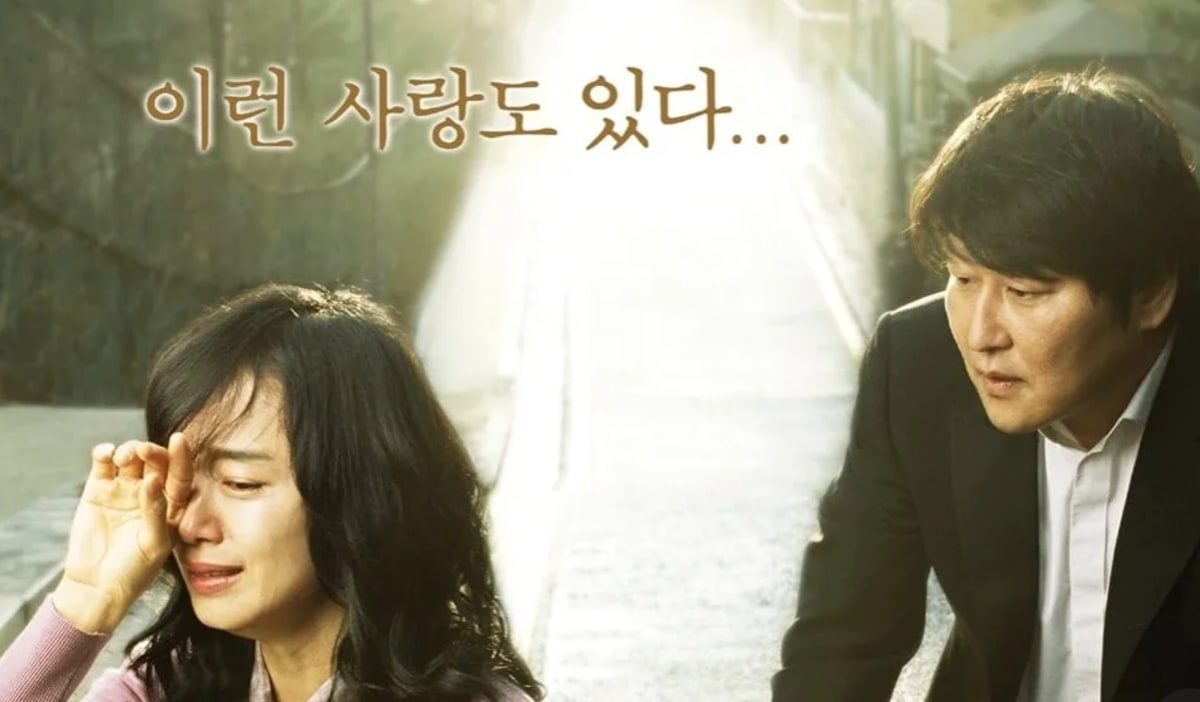
If Korean thrillers use crime to talk about social failure, Korean social dramas dispense with the crime altogether and talk about social failure directly. No genre mechanism to hold the audience at a comfortable distance. Just people in circumstances — economic, historical, relational — that the film refuses to resolve, explain away, or make redemptive by formula.
This is the strand of Korean cinema most recognized by international critics and film festivals. It's also the least immediately accessible — these films demand patience, attention, and a willingness to sit with difficulty. The reward is a body of cinema that is honest about human experience in ways that most national cinemas rarely achieve.
What Defines Korean Social Drama
Class as structural, not incidental. Korean social dramas engage with class difference not as background setting but as the central operating mechanism of their stories. Who has money, who doesn't, who can move between worlds, who is trapped — these aren't just character details; they're the architecture of the drama. Parasite is the most globally recognized example, but the preoccupation runs through the entire genre.
Institutional failure without villains. Korean social dramas rarely give you a clearly evil character to blame. The suffering in these films is produced by systems — economic, political, familial — that are too complex for individual villains to contain. People do terrible things; the films are interested in why, not just what.
Restraint as a moral position. The directors most associated with Korean social drama — Lee Chang-dong, Hong Sang-soo, Yim Soon-rye — tend toward formal restraint: long takes, minimal score, naturalistic performance, elliptical editing. The restraint is ethical. Sensationalizing suffering would be a form of disrespect to it.
Ambiguous endings as honesty. These films resist resolution because unresolved problems don't resolve neatly in real life. An ending that tied things up would be a lie about what the film has been describing.
Essential Korean Social Drama Films
Oasis (오아시스, 2002)
Director: Lee Chang-dong
A man recently released from prison for a vehicular homicide pursues a relationship with the daughter of the man he killed — a woman with cerebral palsy who is marginalized by her own family. Oasis is among the most challenging films in Korean cinema: the central relationship is complicated and uncomfortable, the world it depicts is one where society's stated values are consistently betrayed by its actual treatment of the vulnerable. The lead performances — by Sol Kyung-gu and Moon So-ri — are extraordinary.
Lee Chang-dong's central preoccupation across his entire filmography is the gap between how a society claims to treat its people and how it actually does. Oasis states that gap directly and without relief.
Secret Sunshine (밀양, 2007)
Director: Lee Chang-dong
A widow moves to the small city of Miryang with her young son following her husband's death. A terrible thing happens. She turns to Christianity for comfort, and then something else happens that challenges what Christianity has given her. Secret Sunshine is Lee Chang-dong's most formally austere film — long takes, naturalistic sound, a performance by Jeon Do-yeon that won the Cannes Best Actress award. It's a film about faith, grief, forgiveness, and the limits of each — and it is genuinely difficult, in the way that films about faith and grief need to be.
Poetry (시, 2010)
Director: Lee Chang-dong
A woman in her sixties, recently diagnosed with early Alzheimer's, begins attending a poetry class — and discovers that her teenage grandson has participated in a terrible act. Poetry is a film about how we bear moral knowledge: what we do when someone we love has done something unforgivable, and whether beauty — the search for it, the capacity to see it — survives the encounter with evil.
Yoon Jeong-hee's performance is one of Korean cinema's finest. The film won the Palme d'Or for Best Screenplay at Cannes.
Burning (버닝, 2018)
Director: Lee Chang-dong
Based loosely on a Haruki Murakami short story, a young delivery driver befriends a woman who returns from a trip to Africa with a mysterious wealthy man. The film is structured as an increasingly paranoid psychological mystery, but the mystery is ultimately about class — about the specific invisibility of young men without economic future in contemporary Korean society, and about the violence that invisibility might produce.
Burning is Lee Chang-dong's most internationally recognized film. It was shortlisted for the Academy Award for Best International Film. The final act is one of Korean cinema's most discussed and debated sequences.
Tip — Lee Chang-dong's complete filmography: Lee Chang-dong has made six features: Green Fish (초록 물고기, 1997), Peppermint Candy (박하사탕, 2000), Oasis, Secret Sunshine, Poetry, and Burning. They form a coherent body of work with consistent preoccupations — social exclusion, moral failure, the specific suffering of people the world doesn't see. Watching them in order, from Green Fish to Burning, is one of the most rewarding experiences available in Korean cinema.
Parasite (기생충, 2019)
Director: Bong Joon-ho
(Discussed in full in its own article)
Parasite is the social drama that came packaged in thriller and dark comedy forms effective enough to reach a mass audience — which made it both a breakthrough and a somewhat misleading representative of the genre it belongs to. The Bong Joon-ho sensibility — genre as social observation delivery mechanism — is very different from Lee Chang-dong's direct, unmediated approach. Both are essential Korean social cinema.
A Single Rider (당신, 거기 있어줄래요, 2017)
(note: see also A Corporate Warrior 직원 for workplace drama)
Korean social drama also includes a substantial body of work about labor: the specific pressures of Korean corporate culture, precarious employment, and the ways economic anxiety shapes human relationships. Cart (카트, 2014) — about supermarket workers organizing after mass layoffs — and Another Family (또 하나의 가족, 2014) are examples of this strand.
Hong Sang-soo: A Separate World
Hong Sang-soo (홍상수) occupies a distinct position in Korean social drama — prolific (30+ films), formally specific (repeated structures, overlapping conversations, identical scenarios that reveal themselves to be slightly different on closer examination), almost entirely set among artists and intellectuals in Seoul.
His films are about romantic relationships and self-deception in ways that are often very funny and quietly devastating. They are not accessible by any conventional standard — but viewers who find his wavelength often become devoted. Entry points: The Day He Arrives (북촌방향, 2011), Right Now, Wrong Then (지금은맞고그때는틀리다, 2015).
Where to Start
If you want | Start with |
|---|---|
The most internationally recognized | Burning (accessible + acclaimed) |
Lee Chang-dong's best-loved work | Poetry |
Most challenging, most rewarding | Oasis or Secret Sunshine |
Social drama in genre form | Parasite |
Something lighter in the register | Hong Sang-soo's The Day He Arrives |
Comments
Inappropriate comments may be deleted.
Log in to leave a comment.
No comments yet. Be the first!