
Genre Guide: Thriller (스릴러)
Why Korean thrillers hit differently — and where to start if you want to understand what makes them work.
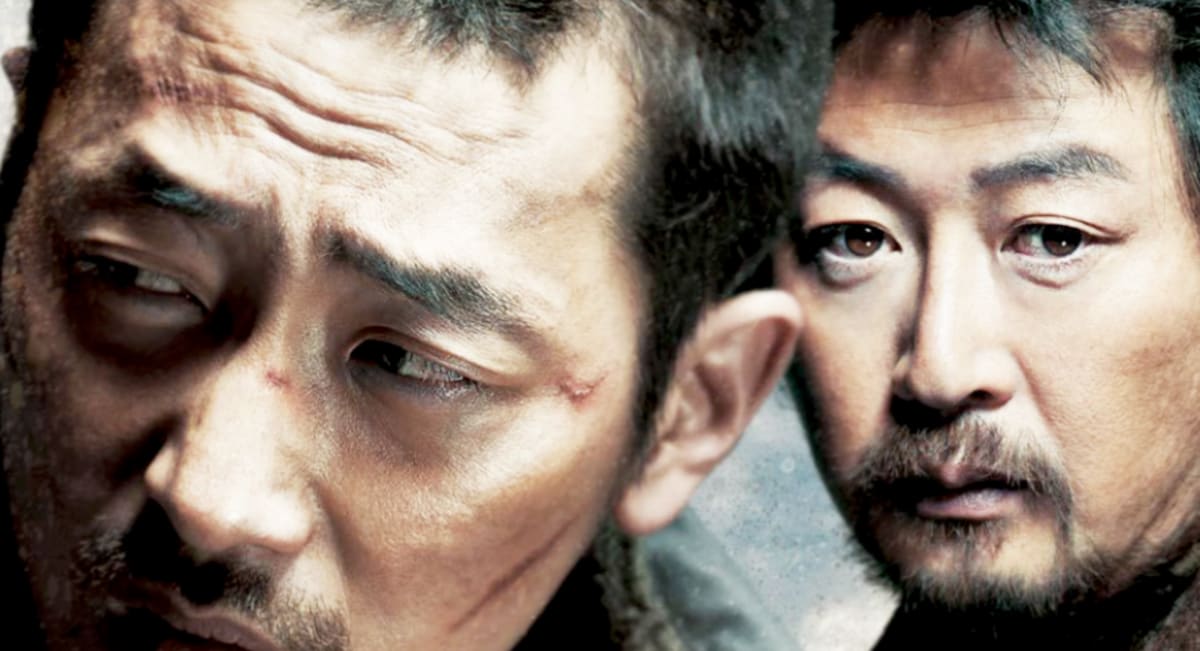
Korean thrillers operate by a different set of assumptions than their Hollywood counterparts. Where Hollywood thrillers tend to resolve — the detective catches the killer, the conspiracy is exposed, justice is served — Korean thrillers often don't. The killer goes free. The corruption is too deep. The system fails. The protagonist survives but is permanently damaged. It's not nihilism exactly. It's a specific pessimism about institutions and power that comes from a culture that has direct historical experience of institutions and power failing in very large ways.
That's why Korean thrillers feel different. The tension isn't just plot tension — it's moral and social tension.
What Makes Korean Thrillers Distinctive
Social critique embedded in genre mechanics. Korean thrillers consistently use crime, investigation, and conspiracy as vehicles for examining class, institutional corruption, and historical trauma. Memories of Murder (2003) is about a real serial murder case — but it's also about the limits of provincial police investigation and the social conditions that enabled the crimes. The Yellow Sea (2010) is a hitman thriller — but it's also about migrant labor, debt, and desperation.
Morally compromised protagonists. Korean thriller protagonists are rarely clean heroes. They make bad choices, operate outside the law, and sometimes are as responsible for the chaos as the antagonists. This produces a different kind of viewer investment — not rooting for the hero, but watching a human being navigate a situation that has no clean exit.
Procedural rigor with emotional intensity. Korean thrillers often take their procedural elements seriously — the actual mechanics of investigation, crime, and detection — while simultaneously escalating to emotional intensities that pure procedural films rarely reach. The combination is specific and potent.
Physical violence as consequence, not spectacle. Korean action and thriller films have violence, but it tends to be depicted with weight — as something that hurts, exhausts, and costs — rather than as choreographed entertainment. The Oldboy corridor fight is the canonical example: a single-shot sequence where the brutality is deliberately unglamorous.
Essential Korean Thrillers
Memories of Murder (살인의 추억, 2003)
Director: Bong Joon-ho
Based on the true story of Korea's first serial murders (1986–1991) and the investigation that never produced a conviction. Two detectives — one provincial and intuitive, one Seoul-trained and systematic — work the case as the body count grows and the country enters increasing political turbulence.
Memories of Murder is the film that established Bong Joon-ho's international reputation and is frequently cited as one of the greatest thrillers ever made. What makes it devastating is the ending — a refusal of resolution that the film has been building toward for two hours, and a final image that changes the meaning of everything before it.
Watch if: You want to understand what Korean thriller is capable of at its best.
I Saw the Devil (악마를 보았다, 2010)
Director: Kim Jee-woon
A special agent hunts the serial killer who murdered his fiancée — and catches him early in the film. What follows is a revenge thriller that systematically destroys its protagonist by exploring what it costs to become a monster in pursuit of a monster.
Kim Jee-woon's film is brutal, technically exceptional, and genuinely disturbing — not for the violence alone (though there is significant violence), but for the moral trap at its center. One of the most formally accomplished Korean thrillers.
Note: Not recommended for viewers sensitive to graphic violence. It is genuinely intense.
Parasite (기생충, 2019)
Director: Bong Joon-ho
Parasite begins as a dark comedy about class and ends as something much harder to categorize — a film that uses the mechanics of thriller to make its social observation feel physical and inevitable. It's discussed in detail in its own article, but as a thriller it's a masterwork of escalating dread built entirely from social architecture.
The Yellow Sea (황해, 2010)
Director: Na Hong-jin
A Korean-Chinese migrant worker in the borderland area of Yanbian accepts a contract killing in exchange for debt relief. What follows is one of the most exhausting, visceral pursuit films in Korean cinema — two hours of barely controlled chaos that escalates without relief. Na Hong-jin has described it as a film about the desperation that turns ordinary people into instruments of violence.
Note: Like I Saw the Devil, this is extremely intense. Prepare accordingly.
A Bittersweet Life (달콤한 인생, 2005)
Director: Kim Jee-woon
A hitman for a crime boss is ordered to surveil his boss's girlfriend — and makes a decision that sets off a violent chain of consequences. Kim Jee-woon's film is Korean neo-noir at its most stylish: beautiful cinematography, precise choreography, and a specific kind of doomed romanticism. Less socially complex than the other films on this list, but formally stunning.
Tip — Na Hong-jin's three films: Na Hong-jin has directed exactly three feature films — The Chaser (추격자, 2008), The Yellow Sea, and The Wailing — and all three are essential Korean thriller viewing. The Chaser is a relentless pursuit film based on actual serial murder cases; it's possibly the most accessible entry point to his work. Watching all three in sequence gives a clear picture of how one filmmaker developed an utterly distinctive Korean thriller sensibility.
The Neo-Noir Thread
A subset of Korean thriller draws explicitly on Western noir conventions — crime, femme fatales, moral compromise, visual darkness — while inflecting them with Korean social context.
Park Chan-wook's work is the most visible in this category — Oldboy, Sympathy for Mr. Vengeance, Lady Vengeance — but the impulse runs through Korean thriller broadly. Korean neo-noir tends to be more visually stylized than the social-realist thrillers and more willing to lean into genre pleasure.
Decision to Leave (헤어질 결심, 2022) — Park Chan-wook's most recent work — is a romantic thriller that deliberately plays with and against noir conventions; a detective investigating a suspicious death falls for the suspect. It won Park the Best Director prize at Cannes.
Where to Start
If you want | Start with |
|---|---|
The best Korean thriller, full stop | Memories of Murder |
Maximum intensity | I Saw the Devil or The Yellow Sea |
Style and genre pleasure | A Bittersweet Life |
Horror-thriller hybrid | The Wailing |
A masterwork of social thriller | Parasite |
Recent critical darling | Decision to Leave |
Comments
Inappropriate comments may be deleted.
Log in to leave a comment.
No comments yet. Be the first!