
Hangul (한글): Tense, Aspirated & Compound Vowels
Complete the Hangul system with puffed consonants, tight double sounds, and blended vowels.
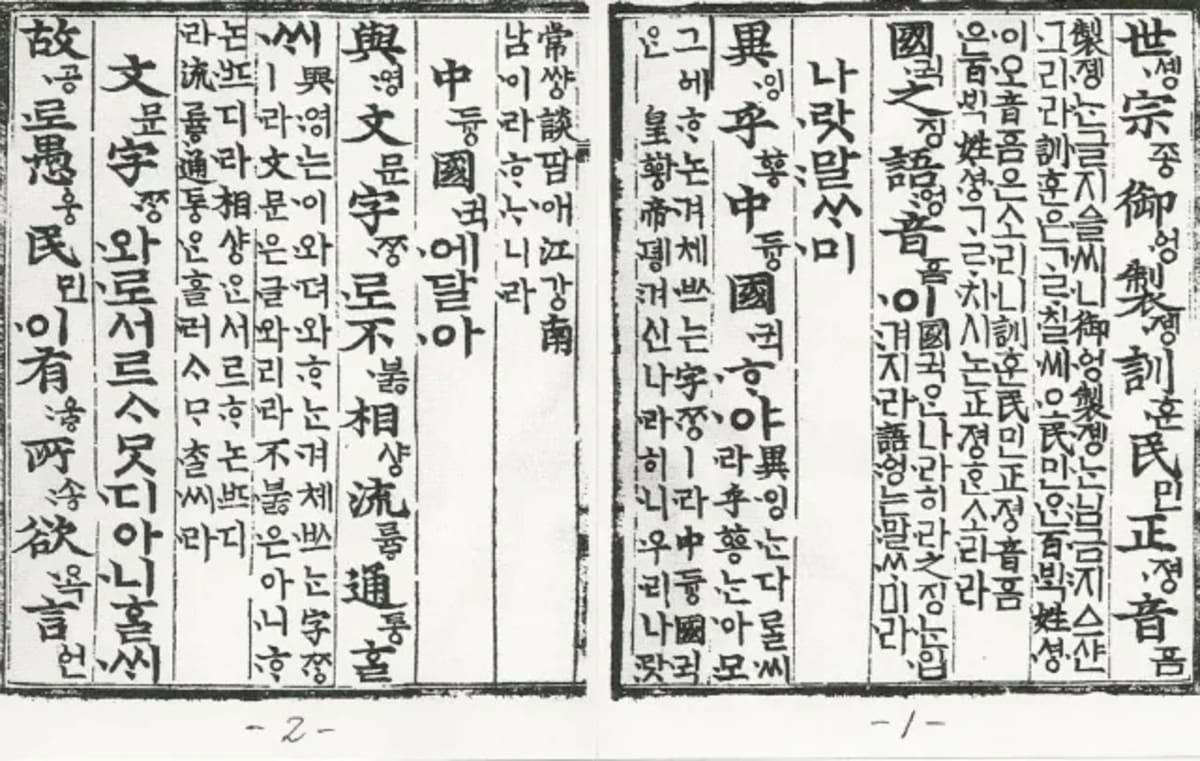
Here's a satisfying truth about the sounds you haven't learned yet: none of them are random. Every consonant and vowel in this article is a direct extension of what you already know from the previous one. You're not memorizing new things from scratch — you're upgrading what you have.
By the end of this article, you'll have the complete Hangul system in front of you.
1. Aspirated Consonants — Add Air
Take the basic consonants ㄱ ㄷ ㅂ ㅈ and add one extra stroke to each. The result is a new set of consonants — ㅋ ㅌ ㅍ ㅊ — that sound almost identical, but with a burst of air on the way out.
Linguists call these aspirated consonants. You don't need that word — just remember: more air.
Basic | + stroke | Sound | With ㅏ | Example word |
|---|---|---|---|---|
ㄱ (g) | → ㅋ | k | 카 (ka) | 커피 Keo-pi — coffee |
ㄷ (d) | → ㅌ | t | 타 (ta) | 토마토 To-ma-to — tomato |
ㅂ (b) | → ㅍ | p | 파 (pa) | 피자 Pi-ja — pizza |
ㅈ (j) | → ㅊ | ch | 차 (cha) | 치즈 Chi-jeu — cheese |
Tip — The hand test: Hold your palm in front of your mouth. Say 가 (ga) — you should feel almost no air. Now say 카 (ka) — you should feel a clear puff. If you can feel the difference on your hand, you've got it.
Notice something: the example words above — coffee, tomato, pizza, cheese — are all borrowed from English and other languages. Korean has absorbed a huge number of foreign words, and they're almost always written with aspirated consonants. If a word sounds like something you already know, it probably uses ㅋ, ㅌ, ㅍ, or ㅊ.
2. Tense Consonants — Hold Back the Air
Now for the opposite direction. Take the same basic consonants ㄱ ㄷ ㅂ ㅅ ㅈ and write each one twice. The result — ㄲ ㄸ ㅃ ㅆ ㅉ — is a set of sounds made with almost no air at all. Instead of releasing, you hold tension in your throat and let the sound pop out short and sharp.
English doesn't have an equivalent. The closest analogy: the clipped, tight sound of the p in spa or spot — where the "p" has no breath behind it.
Doubled | Sound | With ㅏ | Example word |
|---|---|---|---|
ㄲ (ㄱ+ㄱ) | kk | 까 (kka) | 토끼 To-kki — rabbit |
ㄸ (ㄷ+ㄷ) | tt | 따 (tta) | 뜨겁다 Tteu-geop-da — to be hot |
ㅃ (ㅂ+ㅂ) | pp | 빠 (ppa) | 빠르다 Ppa-reu-da — to be fast |
ㅆ (ㅅ+ㅅ) | ss | 싸 (ssa) | 싸다 Ssa-da — to be cheap |
ㅉ (ㅈ+ㅈ) | jj | 짜 (jja) | 짜다 Jja-da — to be salty |
Tip — Three-way contrast: Korean has a three-way distinction that English doesn't. For the "g/k" family alone, there are three separate sounds:
Getting these perfectly right takes time. For now, the key is knowing all three exist — your ear will start catching the difference as you listen to more Korean.
ㄱ — basic, relaxed (가 ga)
ㅋ — aspirated, airy (카 ka)
ㄲ — tense, clipped (까 kka)
3. Compound Vowels — Mix Two Sounds Into One
You already know the 10 basic vowels. Compound vowels are what happens when two of those vowels merge into a single new sound. Think of it like mixing paint — two colors blend into one.
There are three rules that cover almost everything:
Rule 1 — Basic vowel + ㅣ = a new front vowel
Combination | Result | Sounds like |
|---|---|---|
ㅏ (a) + ㅣ (i) | ㅐ | the "a" in apple |
ㅓ (eo) + ㅣ (i) | ㅔ | the "e" in bed |
Tip — ㅐ and ㅔ sound the same today: Modern Korean speakers no longer distinguish between these two vowels in everyday speech. They were different historically, but now both sound like a short "eh." Don't stress about the difference — even Koreans don't in conversation.
Rule 2 — ㅗ or ㅜ + another vowel = a W sound
When a rounded vowel (ㅗ or ㅜ) meets another vowel, it melts into a "w" glide at the front:
Combination | Result | Sounds like |
|---|---|---|
ㅗ (o) + ㅏ (a) | ㅘ (wa) | water |
ㅜ (u) + ㅓ (eo) | ㅝ (wo) | won't |
ㅗ (o) + ㅐ (ae) | ㅙ (wae) | where (roughly) |
Tip — Don't overthink the W vowels: Say each component vowel separately, then speed up until they blur together. ㅗ + ㅏ → "o-a" → "wa." That's the whole trick.
Rule 3 — ㅡ + ㅣ = the trickiest one
Combination | Result | How to say it |
|---|---|---|
ㅡ (eu) + ㅣ (i) | ㅢ (ui) | Start with the flat "eu" sound, then slide your mouth into "ee" without stopping |
ㅢ appears most commonly in the word 의 — used as a possessive marker (like "'s" in English). You'll hear it constantly in Korean. In fast speech, most Koreans reduce it to just "이 (ee)" — so don't worry about perfecting it right away.
4. The Complete Hangul Chart
You now have everything. Here's the full picture:
All Consonants
Basic | Aspirated | Tense |
|---|---|---|
ㄱ (g) | ㅋ (k) | ㄲ (kk) |
ㄴ (n) | — | — |
ㄷ (d) | ㅌ (t) | ㄸ (tt) |
ㄹ (r/l) | — | — |
ㅁ (m) | — | — |
ㅂ (b) | ㅍ (p) | ㅃ (pp) |
ㅅ (s) | — | ㅆ (ss) |
ㅇ (silent/ng) | — | — |
ㅈ (j) | ㅊ (ch) | ㅉ (jj) |
ㅎ (h) | — | — |
All Vowels
Basic | + Y sound | + ㅣ blend | W-series |
|---|---|---|---|
ㅏ (a) | ㅑ (ya) | ㅐ (ae) | — |
ㅓ (eo) | ㅕ (yeo) | ㅔ (e) | — |
ㅗ (o) | ㅛ (yo) | ㅚ (oe) | ㅘ (wa) · ㅙ (wae) |
ㅜ (u) | ㅠ (yu) | ㅟ (wi) | ㅝ (wo) · ㅞ (we) |
ㅡ (eu) | — | ㅢ (ui) | — |
ㅣ (i) | — | — | — |
Bookmark this chart. You'll want to come back to it.
Try It Right Now
Here are five words that use the sounds from this article. Sound each one out:
까페 — Kka-pe (café — tense ㄲ at the start)
치킨 — Chi-kin (fried chicken — aspirated ㅊ and ㅋ)
빠르다 — Ppa-reu-da (to be fast — tense ㅃ)
과일 — Gwa-il (fruit — W-vowel ㅘ)
의사 — Ui-sa (doctor — the tricky ㅢ)
If 까페 and 치킨 feel familiar, they should — they're Korean versions of words you already know. That's the point: Hangul isn't a wall between you and Korean. It's the door.
Comments (1)
Inappropriate comments may be deleted.
Log in to leave a comment.

good