
Jeonju (전주): Hanok Village, Bibimbap & Tradition
Jeonju is where Korea goes when it wants to remember what Korea tastes like.
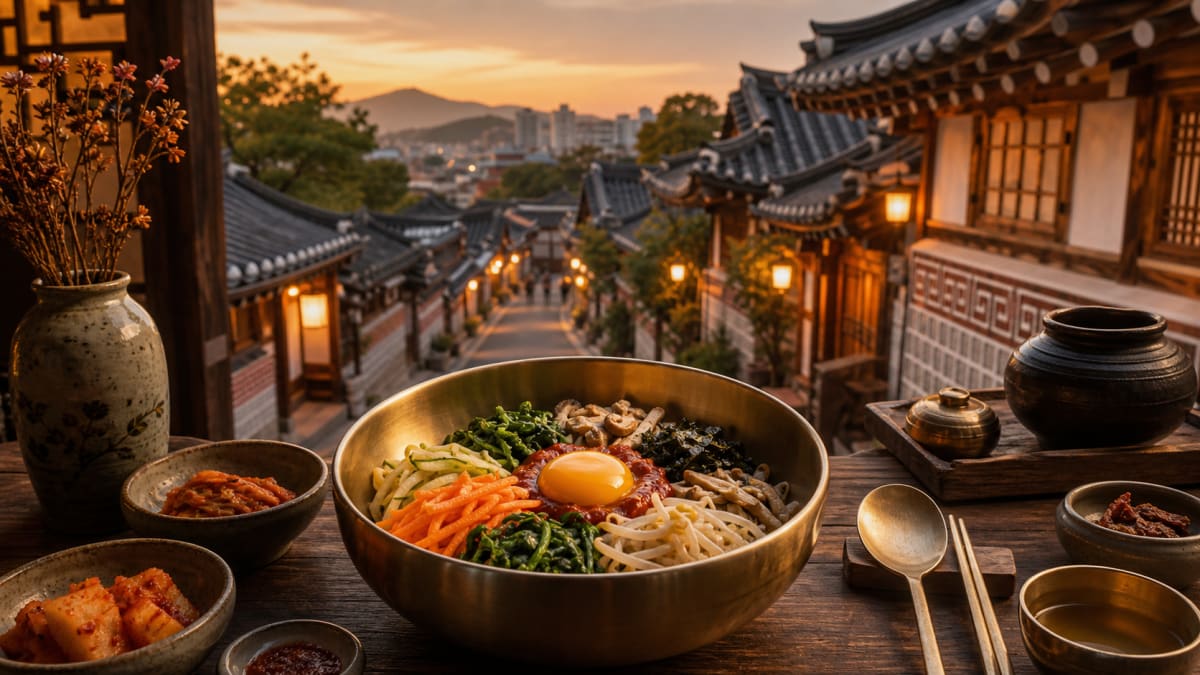
There is a reason Koreans from Seoul make the three-hour journey to 전주 (Jeonju) specifically for a meal. 전라도 (Jeolla Province) has a culinary reputation that precedes it across the country — the soil is rich, the tradition of cooking is ancient, and the standard for what constitutes an acceptable meal is higher than almost anywhere else in Korea. 전주 비빔밥 (Jeonju bibimbap) is not a tourist marketing construct. Koreans believe — with genuine regional pride on one side and regional envy on the other — that it is a different dish than what you get elsewhere.
The food is reason enough. But Jeonju also has 한옥마을 (Hanok Village) — the largest intact cluster of traditional wooden architecture in Korea — and a cultural depth that rewards multiple days.
전주 한옥마을 (Jeonju Hanok Village)
전주 한옥마을 contains approximately 735 traditional 한옥 (hanok) buildings — an entire neighborhood of the curved-roof wooden architecture that characterized pre-modern Korean residential and commercial life. Unlike Bukchon in Seoul, which is primarily residential and heavily restricted, Jeonju Hanok Village has been developed as a cultural destination while retaining much of its lived-in character.
The village is walkable — the main area is roughly 1km across — with galleries, craft shops, traditional tea houses, guesthouses in converted hanok, and small museums. The visual coherence of the streetscape — no concrete buildings, no high-rises — creates an atmosphere that is genuinely different from any other Korean urban environment.
경기전 (Gyeonggijeon Shrine): Within the hanok village — a shrine housing a portrait of 태조 이성계 (Taejo Yi Seonggye), the founder of the Joseon Dynasty. The shrine and its surrounding bamboo grove are the village's most atmospheric site. Free entry.
전동성당 (Jeondong Cathedral): A striking Romanesque-Byzantine Catholic cathedral completed in 1914, directly across from Gyeonggijeon Shrine. The juxtaposition of the Korean shrine and the European cathedral, separated by a narrow street, is distinctly Jeonju.
한복 대여 (Hanbok rental): Available throughout the village at ₩10,000–₩20,000 per day — wearing hanbok in the setting of the hanok village is both a photo opportunity and an experience with genuine atmosphere. Dozens of rental shops compete; the quality varies, browse before committing.
Tip — 아침 방문 (Morning Visit): Jeonju Hanok Village receives approximately 12 million visitors annually — heavily concentrated in afternoon hours and weekends. Arriving before 9am transforms the experience: the lanes are empty, the light is better, and the village feels like what it originally was rather than what it has become. Stay overnight in a hanok guesthouse (한옥 게스트하우스) to make this naturally possible.
전주 음식 (Jeonju Food)
전주 is considered by many Koreans the country's culinary capital. That is a strong claim, and it is taken seriously here.
전주 비빔밥 (Jeonju Bibimbap):
The version of 비빔밥 (bibimbap — rice mixed with vegetables, meat, and gochujang paste) that defines the dish. Jeonju bibimbap is distinguishable by: 콩나물 (kongnamul, soybean sprouts) grown locally and considered qualitatively different, 육회 (yukhoe, raw beef) as a standard ingredient, the use of 참기름 (sesame oil) in specific proportions, and the 놋그릇 (brass bowl) it is served in, which keeps it warm. The canonical address: 한옥마을 내 비빔밥 골목 (Bibimbap Street within the hanok village), or the established restaurants like 고궁 (Gogung) that have been serving it for generations.
전주 콩나물국밥 (Kongnamul Gukbap):
Soybean sprout rice soup — a hangover cure and morning staple. The Jeonju version is celebrated nationally. Often served with 열무 kimchi and small side dishes. Available at traditional restaurants near the central market. ₩8,000–₩10,000.
전주 한정식 (Jeonju Hanjeongsik):
The most elaborate expression of Korean cuisine — a set meal of dozens of small dishes representing the full range of Jeolla Province ingredients and techniques. A full 한정식 experience in Jeonju is considered among the finest culinary experiences in Korea. Prices vary from ₩30,000 to ₩100,000+ per person.
모주 (Moju):
A lightly alcoholic beverage unique to Jeonju — 막걸리 (makgeolli) simmered with ginger and cinnamon, served warm. Often provided free as an accompaniment to 콩나물국밥. The flavor is gentle and warming. Try it at the central market.
전주 남부시장 (Jeonju Nambu Market)
전주 남부시장 (Jeonju Nambu Market) is a traditional covered market with one specific attraction that draws visitors from across Korea: the 야시장 (night market), operating Thursday through Sunday evenings. The market stalls offer traditional Jeonju snacks alongside contemporary fusion food — 비빔밥 버거, 꼬치, 호떡 variations — in a setting that manages to be both commercial and genuinely local.
교통 (Getting There)
서울에서 (From Seoul): KTX from Seoul Station to 전주역 (Jeonju Station) — approximately 1h 50min, ₩38,000–₩46,800. Jeonju Station is 3km from the hanok village — taxi (₩5,000–₩7,000) or bus.
부산에서 (From Busan): Approximately 2–2.5 hours by KTX or intercity bus — feasible as a day trip from Busan or as part of a southern Korea itinerary.
Key Facts
한옥 수 (Hanok Count) | Approximately 735 traditional hanok buildings — largest intact cluster of traditional architecture in Korea |
연간 방문객 (Annual Visitors) | Approximately 12 million — visit early morning or stay overnight to experience the village without crowds |
전주 비빔밥 (Jeonju Bibimbap) | The canonical version — kongnamul sprouts, raw beef (육회), sesame oil ratio, brass bowl; widely considered the definitive expression of the dish |
경기전 (Gyeonggijeon) | Joseon Dynasty founder's portrait shrine — free entry; bamboo grove is the village's most atmospheric site |
한정식 (Hanjeongsik) | Jeolla Province set meal — dozens of dishes; ₩30,000–₩100,000+ per person; considered among Korea's finest dining experiences |
KTX 소요 시간 (KTX Travel Time) | 1h 50min from Seoul — ₩38,000–₩46,800; Jeonju Station to hanok village by taxi ₩5,000–₩7,000 |
모주 (Moju) | Jeonju-specific warm drink — makgeolli simmered with ginger and cinnamon; often served free with kongnamul gukbap |
Comments
Inappropriate comments may be deleted.
Log in to leave a comment.
No comments yet. Be the first!