
Genre Guide: Romantic Comedy (로맨틱 코메디)
The films that defined the genre, the ones that still hold up, and why Korean romantic comedy has its own distinct flavor.
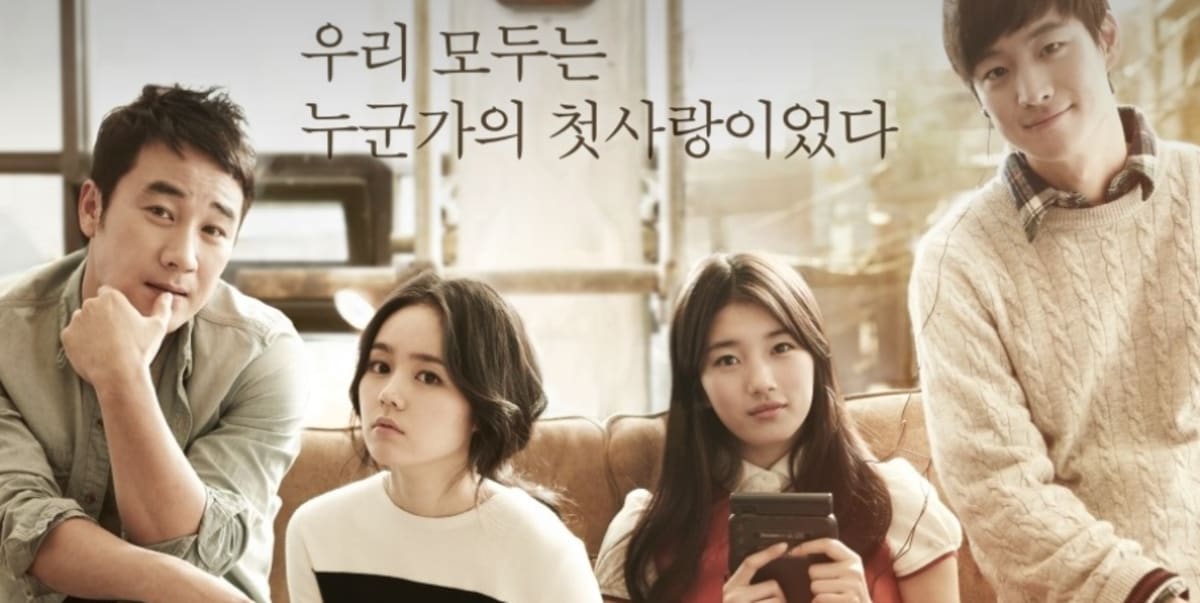
Korean romantic comedy has a specific texture. The meet-cute is often more chaotic than charming. The male lead is frequently arrogant, clumsy, or deeply confused. The female lead is usually more capable than anyone around her acknowledges. There are scenes of running — someone always runs at some point. And underneath the lightness, there's almost always something real: loneliness, missed timing, the specific sadness of being in the wrong place at the wrong time in your life.
That combination — genuinely funny, genuinely sad, and emotionally honest in ways that broader genre conventions don't always allow — is what made Korean rom-coms a cultural export years before K-Pop or K-Drama had broken globally.
Why Korean Rom-Coms Work
The female protagonist is usually the interesting one. Classic Korean rom-coms from the early 2000s — 엽기적인 그녀 (My Sassy Girl) in particular — established a female lead type that's combative, unpredictable, and far more dimensionally drawn than her Hollywood counterpart. She's not waiting to be chosen; she's difficult to handle, and that difficulty is the point.
The tonal range is wider. Korean romantic comedies are comfortable moving from broad physical comedy to genuine emotional devastation within the same scene. The "sad ending" or bittersweet conclusion is far more acceptable in Korean rom-com than in Hollywood's genre conventions, which expect resolution.
Time and timing. Many of the best Korean rom-coms are structured around missed timing — people who almost connected, who found each other too early or too late, who were in the wrong circumstances. This produces a particular kind of melancholy that sits alongside the comedy without canceling it.
The Essential Films
엽기적인 그녀 (My Sassy Girl, 2001)
Director: 곽재용 (Kwak Jae-yong)
A college student meets a drunk woman on the subway who vomits on a passenger and he reflexively pretends to be her boyfriend. What follows is a chaotic relationship in which she is routinely aggressive, unpredictable, and impossible — and he gradually falls for her anyway.
엽기적인 그녀 is the definitive Korean romantic comedy — the one that established the genre's international reputation and defined its female lead type. Based on a series of online posts by a man describing his actual relationship, the film captures something specific about early 2000s Korean youth culture. It has been remade multiple times internationally, and none of the remakes approach the original.
The film's emotional core — which the comedy masks for much of the runtime — is a grief story. Knowing this before you watch changes what you notice; watching it a second time is a different experience.
조폭 마누라 (My Wife Is a Gangster, 2001)
Director: 조진규 (Jo Jin-gyu)
A high-ranking female mob boss reluctantly agrees to marry a mild-mannered office worker to fulfill her dying sister's wish. A broad action comedy that became one of the highest-grossing Korean films of its year and launched two sequels. Less emotionally complex than 엽기적인 그녀 but extremely entertaining and a clear product of the same early-2000s genre moment.
클래식 (The Classic, 2003)
Director: 곽재용
A dual love story — a contemporary storyline and its parallel in the 1960s — about a woman who discovers her mother's love letters and the relationship they describe. 클래식 is the emotional counterweight to 엽기적인 그녀: slower, more formal, explicitly melancholy. If 엽기적인 그녀 is the genre's comic peak, 클래식 is its romantic one.
건축학개론 (Architecture 101, 2012)
Director: 엄태화 (Uhm Tae-hwa)
A man is hired by a woman to renovate her late father's house — the same woman he was in love with in college fifteen years earlier. The film alternates between past (the college romance) and present (the reunion and its complications), using architecture as a metaphor for the structures people build around their feelings.
건축학개론 became a genuine cultural phenomenon in Korea — it touched something specific about a generation's experience of 첫사랑 (first love) and what happens to it with time.
Tip — 첫사랑 (first love) 영화: Korean cinema has a distinctive subgenre — the 첫사랑 film — built around the specific, irreplaceable quality of young love and the particular sadness of its loss or transformation over time. 건축학개론, 시월애 (Il Mare), and the drama 응답하라 1988 (Reply 1988) are all working in this register. If this theme resonates with you, Korean film and drama has more in this vein than almost any other national cinema.
시월애 (Il Mare, 2000)
Director: 이현승 (Lee Hyun-seung)
A man and woman discover they are sharing a mailbox despite living in the same house two years apart — and begin a correspondence across time. 시월애 is the source material for the American remake The Lake House (2006); the original is significantly more melancholy and more visually poetic. A quiet, lovely film that rewards patience.
써니 (Sunny, 2011)
Director: 강형철 (Kang Hyeong-cheol)
A woman reconnects with her 고등학교 (high school) friend group when she discovers that one member is terminally ill — and the film moves between their tumultuous 1980s school days and the present. 써니 is an ensemble female friendship film as much as a romance, and its emotional core is about female bonding and the loss of youth rather than romantic love. One of the best Korean films about female friendship and one of the most beloved domestic films of the 2010s.
The Contemporary Direction
Korean rom-com as a distinct theatrical genre has partly migrated to streaming and drama format — K-Drama has absorbed much of the romantic comedy audience, with longer-form series offering more space for the genre's emotional dynamics to develop.
Contemporary Korean romantic films tend to be more quietly realist and less generically coded than the early-2000s peak:
수학의 정석 (In Our Prime, 2022) — a 북한이탈주민 (North Korean defector) who was a math genius works as a janitor and befriends a high school student; less a romance than a connection film, but works in a similar emotional register
Where to Start
If You Want | Start With |
|---|---|
The classic of the genre | 엽기적인 그녀 (My Sassy Girl) |
Pure romantic emotion | 클래식 (The Classic) or 시월애 (Il Mare) |
Nostalgia + first love | 건축학개론 (Architecture 101) |
Female friendship + 80s nostalgia | 써니 (Sunny) |
Broad action comedy | 조폭 마누라 (My Wife Is a Gangster) |
Comments
Inappropriate comments may be deleted.
Log in to leave a comment.
No comments yet. Be the first!